
Last updated November 14, 2026
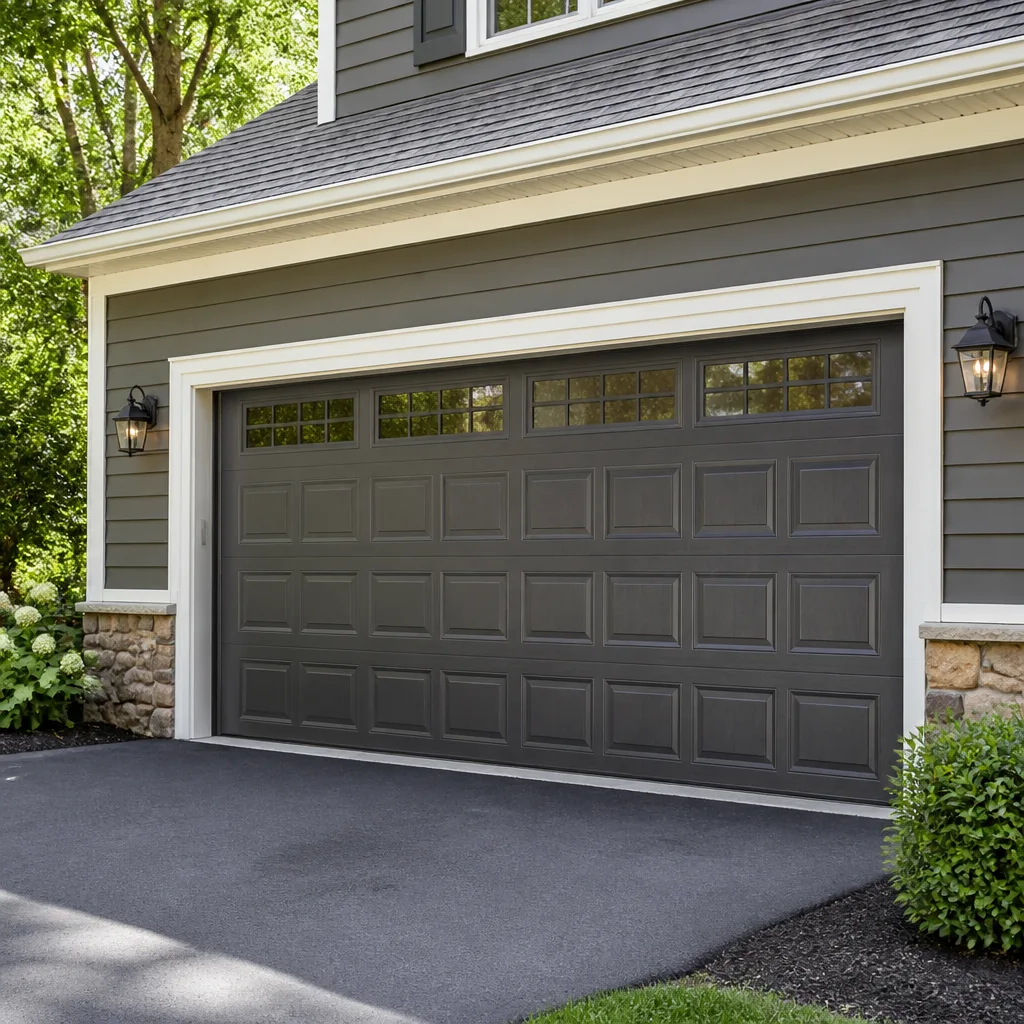 Raised-panel steel
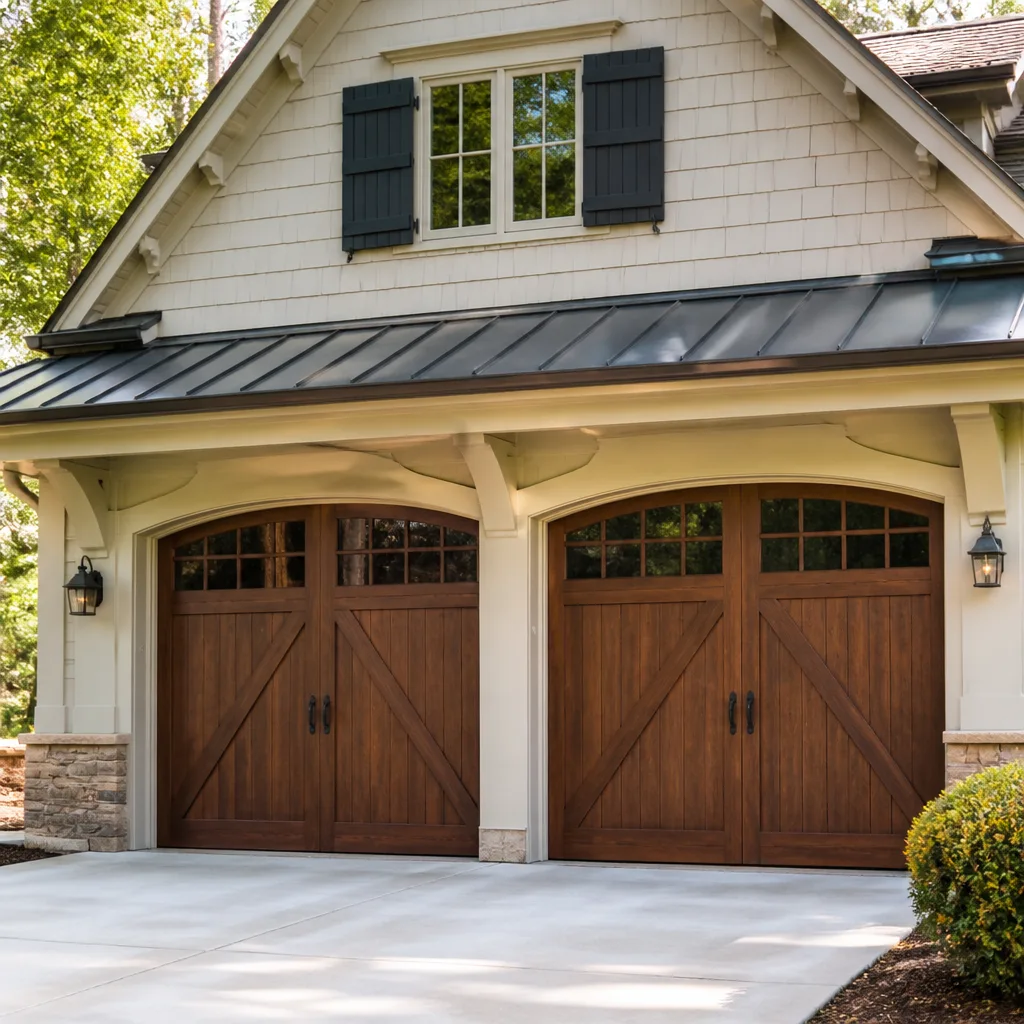 Carriage house
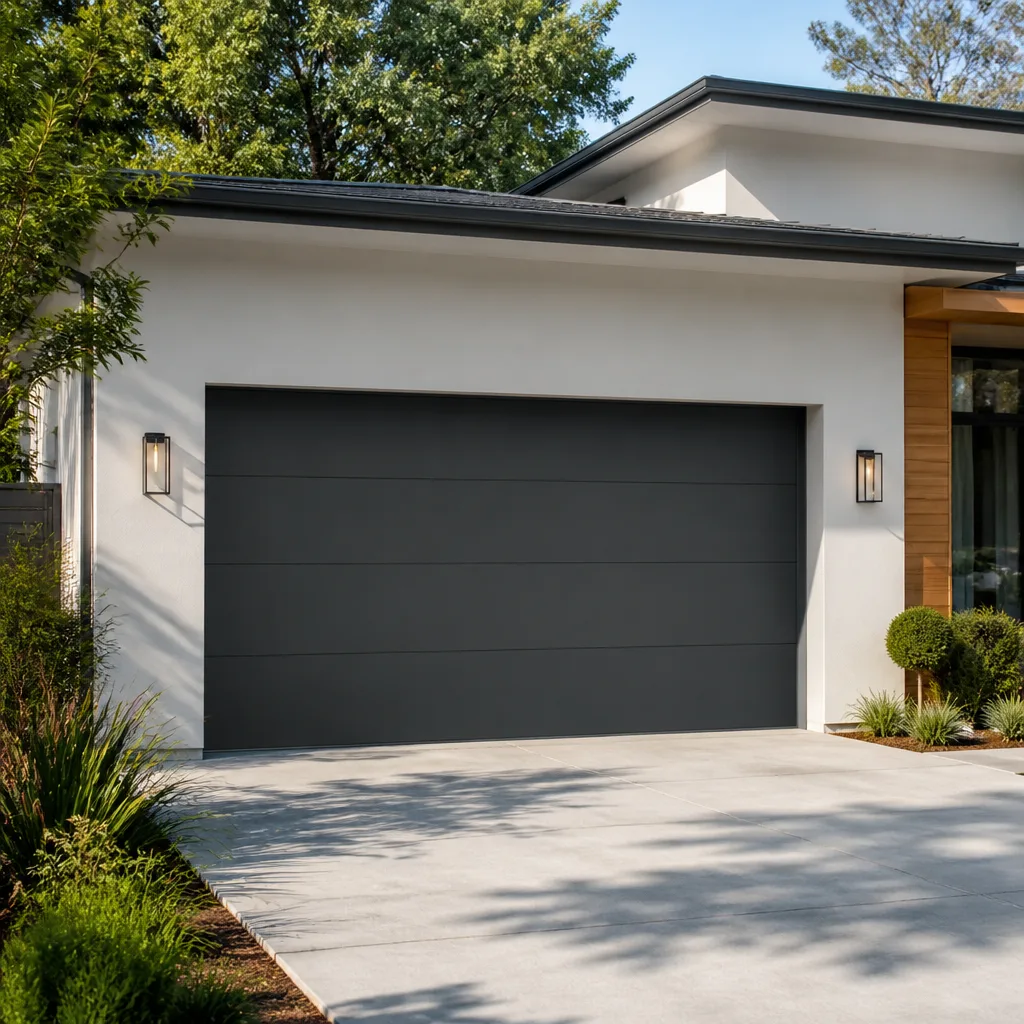 Modern flush
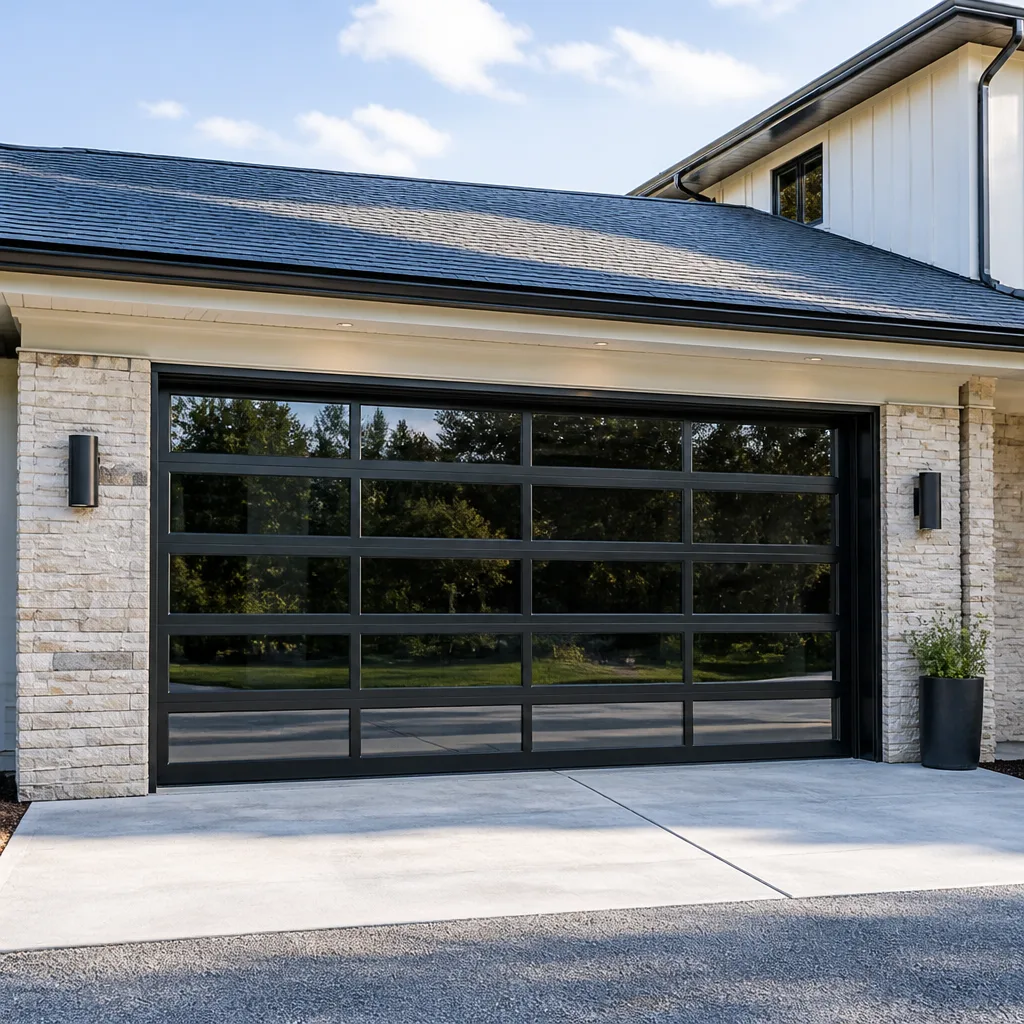 Full-view glass
 LiftMaster openers
 Chamberlain openers
Full 25-point door and opener safety check with every visit - springs, cables, rollers, tracks, and your LiftMaster or Chamberlain opener included
You get a price before we start. It does not change when the pro arrives.
Get your free estimateDIY vs Professional Garage Door: The Midland Homeowner’s Decision Guide
Most homeowners who ask “can I fix this myself?” are really asking the wrong question. The garage door isn’t one system with one risk level; it’s a chain of components where some tasks are genuinely homeowner-friendly and one task can injure you faster than you can react. A torsion spring under tension holds enough stored energy to cause a serious fracture injury in under a second, and that boundary does not move no matter how handy you are. This guide draws the line precisely, task by task, so capable Midland homeowners know exactly where to work and where to stop.
Quick Answer
You can safely handle weatherstripping, sensor cleaning, track wiping, and lubrication yourself. You should not touch torsion springs, cables, or anything that requires releasing spring tension, because the injury risk is real and immediate. Everything in between comes down to tools, time, and whether a failed attempt could affect an insurance claim. If the task involves stored energy or a structural adjustment, call a professional.
Styles & brands we work with
- Raised-panel steel
- Carriage house
- Modern flush
- Full-view glass
- LiftMaster openers
- Chamberlain openers
Table of Contents
- Linear Risk vs. Exponential Risk: The Line That Matters
- Tasks That Are Genuinely Homeowner-Appropriate
- Tasks Where a Failed DIY Attempt Can Cost You Later
- The Honest Cost Comparison
- How Midland Heat Resets Your DIY Timing
- Already Tried a Repair? What to Tell the Technician
- Opener Repairs: A Different Kind of DIY Question
- Common Mistakes to Avoid
Linear Risk vs. Exponential Risk: The Line That Matters
Garage door failures don’t all behave the same way. Some problems get worse gradually and predictably: a worn bottom seal lets in dust and pests, a dry hinge squeaks louder, a dirty sensor causes intermittent reverses. We call that linear risk. You can see it developing, and a mistake usually produces an inconvenience rather than an injury.
Other problems carry exponential risk. One wrong move and the consequence is out of proportion to the effort involved. Torsion spring work sits at the top of that category. So does anything involving the lifting cables under tension, and so does manually forcing a door that has lost spring support. The mechanism doesn’t warn you. It releases.
The distinction matters because “how good am I with tools?” is the wrong self-assessment. A homeowner who has rebuilt an engine is still a beginner with a wound torsion spring. The question isn’t competence, it’s whether the task forgives a mistake. Some do. Some don’t.
Here’s how the tasks usually sort out:
- Linear risk: weatherstripping, sensor alignment, lubrication, track cleaning, tightening accessible fasteners, replacing a remote battery.
- Exponential risk: torsion springs, extension springs, cables, drums, bottom brackets, and any adjustment that changes cable tension.
If you’re unsure which category a problem falls into, that’s a good sign to stop and get a diagnosis. Our team at Nautilus Garage Door Repair handles the whole system, so a single call covers the question you can’t answer yourself.
Tasks That Are Genuinely Homeowner-Appropriate
These jobs are worth doing yourself, partly because they’re low risk and partly because routine upkeep prevents the failures that send people looking for repairs. None of them require releasing spring tension.
1. Replace the bottom weather seal
- Close the door fully and unplug the opener so it can’t be triggered by a remote.
- Work the old seal out of its retainer channel, starting at one end and pulling as you go.
- Clean the channel with a damp rag.
- Slide the new seal in from one end, feeding it evenly rather than stretching it.
- Trim the excess, plug the opener back in, and cycle the door once to confirm the seal compresses evenly across the floor.
2. Clean and align the safety sensors
Wipe the sensor lenses with a dry cloth, clear any spiderwebs or grass clippings, and check that both units face each other squarely. Most sensors have a small indicator light that tells you whether they’re making contact. If the door reverses on its own or refuses to close, sensors are the first thing to rule out.
3. Lubricate the moving parts
A garage door has hinges, rollers, and a torsion tube that benefit from a light application of a proper garage door lubricant. Wipe the old grime off first, apply sparingly, and never spray lubricant on the tracks themselves. Tracks should be clean and dry; grease there collects grit and causes binding.
4. Wipe down the tracks
Dust, grit, and in Midland, windblown dirt, build up in the track channels. A damp rag run down each track clears it. Check that the vertical and horizontal sections line up cleanly. Never bend a track back into place to fix a misalignment; a bent track is a job for a specialist.
5. Tighten visible fasteners
Loose hinge screws and bracket bolts vibrate loose over time. A screwdriver and a check every few months is reasonable. Don’t touch the lag bolts that anchor the track brackets to the wall if you’re not sure of the structure behind them.
These tasks prevent most of the small failures that turn into big ones. A worn seal lets water and dust into the space, and in a Midland summer that dust finds its way into hinges and rollers faster than most people expect.
Tasks Where a Failed DIY Attempt Can Cost You Later
This is the part most guides skip. When a DIY repair fails, the cost isn’t just the part you bought and the afternoon you spent. The failure can affect how an insurer views a claim later, and it changes how the next technician diagnoses the system.
Here’s how that plays out in practice:
- Spring replacement. If a torsion spring is installed at the wrong wind, the door balances wrong, the opener strains, and the failure shows up months later somewhere else. A homeowner-installed spring that lets go is a very different insurance conversation than a broken spring on a properly maintained door.
- Cable work. Cables under tension can come off the drum with enough force to cause serious injury, and an improperly seated cable can jump the drum later. That’s a mechanism failure that traces directly to the repair attempt.
- Track bending. Forcing a bent track back into shape changes the door’s path. The door then either binds the opener or jumps the track entirely, and the repair bill is now structural rather than cosmetic.
- Opener wiring and force adjustments. Increasing the opener’s force limit to get around a binding door masks the real problem and defeats the safety reverse feature. That is a genuine liability issue, not just a bad idea.
Talk to your insurance provider if you’re unsure whether a prior attempt is relevant to a claim. We aren’t in a position to advise on coverage. What we can tell you is that our technicians diagnose from what they find. When a repair has already been attempted, the first job is separating the original fault from the consequences of the attempt.
For anything involving springs, cables, or forced adjustments, that’s the moment to hand it over. Our garage door repair team works on every scale of failure, including doors that have been half-repaired already.
The Honest Cost Comparison
The DIY math looks simple: the cost of a part versus the cost of a repair. It isn’t simple, because the part is rarely the whole story. Below are the most common repair scenarios and what actually gets absorbed when you take them on yourself.
| Scenario | What DIY Absorbs | What Professional Service Covers |
|---|---|---|
| Broken torsion spring | Specialty winding bars, correct spring matching, real injury risk with no safe margin | Diagnosis, the right spring for your door weight, installation and balance check, done from start to finish without you under tension |
| Door off track | Possible panel or hinge damage trying to lever it back, risk of the door falling | Assessment of what put it off track, correction of alignment, verification that panels and rollers are intact |
| Opener not responding | Hours of guesswork, possibly a replaced logic board that wasn’t the fault | Diagnosis of the circuit, travel limits, safety reverse, and force settings for your specific unit |
| Weather seal replacement | An hour, a pair of hands, and a $20 part | Not needed; this is genuinely a good DIY job |
| Lubrication and sensor cleaning | Ten minutes and a can of lubricant | Not needed; routine upkeep is the homeowner’s job |
The honest picture: on small routine jobs, DIY saves real money and saves a callout. On spring, cable, and track work, the risk absorption is so lopsided that professional service is not a luxury; it’s the cheaper option once you account for specialist tools you probably don’t own, and the cost of a failed attempt.
For an exact figure on your door, call (844) 904-1321 for a free estimate. Estimates are free, and the written price is agreed before any work starts.
How Midland Heat Resets Your DIY Timing
Working on a garage door in Midland in July is not the same job as working on it in October. Mild winters mean the door operates in warm conditions for most of the year, but the summer months bring heat that changes both the metal and the person doing the work.
Two things get difficult in the heat:
- Door geometry shifts. Panels, tracks, and springs respond to temperature. If you adjust a hinge, tighten a track bracket, or make any sort of adjustment on a hot afternoon, the setting that feels right at 105 degrees may not be the setting that holds once the temperature drops twenty degrees overnight. The adjustment has to be redone, or worse, the door binds in the cooler evening.
- The person doing the work overheats faster than they expect. Garage work concentrates heat, especially with the door closed and the space unventilated. A homeowner working alone in these conditions is at higher risk of a slip or a bad decision, and a bad decision around a garage door is not a minor event.
The practical fix is timing. Do any adjustment work early morning, before the day heats up. If a repair needs to be redone once temperatures normalize, that’s not a sign you did it wrong, it’s the door telling you the adjustment was seasonal. For adjustments that hold year-round, an experienced technician knows to set things at a temperature the door will actually spend most of its time at, and to check the balance again once it settles.
The same heat affects opener performance. Motors work harder in extreme heat, and a borderline unit that seemed fine in spring will start failing in summer. If you notice the door slowing or the opener straining, that’s garage door opener repair territory.
Already Tried a Repair? What to Tell the Technician
A failed DIY attempt isn’t a reason to feel embarrassed. Every technician who works on these systems has walked in behind someone’s afternoon project, and the door isn’t judging you. What matters for a fast diagnosis is that we know what happened, so we can separate the original fault from any problems the attempt created.
Here’s what helps, in order of usefulness:
- Which problem you were trying to fix, and what you did to it. Exactly what you touched, adjusted, or replaced.
- What tools or parts you used. A spring off a shelf is not the same as the one specified for your door’s weight and cycle requirement.
- Whether the door now behaves differently than before your attempt. The new symptom is a starting point, not a mystery.
- Any sounds or smells that were not there before. A new grinding or a burning smell after an opener adjustment narrows it down quickly.
- Whether you noticed any damage while you were in there. A bent track, a frayed cable, a charred wire.
What doesn’t help is a version of the story that leaves out the attempt. A technician starting from the wrong assumption spends time hunting a problem that isn’t in the door, and that time is yours.
If the opener is the part you touched, be specific about the model. We service LiftMaster, Chamberlain, and Craftsman units, along with the other major brands, so knowing the model at the start means the diagnostic goes straight to the right starting point. Our Midland team works across the entire brand range; “we don’t work on that” isn’t a call we make. If you’re unsure of the brand, tell us where the unit is mounted and what it looks like, and we’ll figure it out from there.
Opener Repairs: A Different Kind of DIY Question
Openers look more approachable than springs, and in some cases they are. But they hide a different kind of risk: a DIY opener repair that defeats a safety feature is more dangerous than a broken opener.
The safety reverse feature is what makes a garage door safe to close around people, pets, and cars. When an opener strains, the first thing many owners do is raise the force limit so the door will close again. That solves the symptom and removes the safety net. If a person or pet is under the door when it closes, the opener that was taught to ignore resistance won’t stop.
The same goes for travel limits. Adjusting them slightly wrong leaves the door closing too hard or reversing too early, and neither is obvious until the day it matters.
What’s reasonable for a homeowner to handle on an opener:
- Replacing remote batteries and re-pairing a lost remote.
- Wiping the safety sensor lenses and confirming the sensors face each other.
- Checking that the unit is plugged in and the wall button works before assuming a failure.
What should go to a specialist:
- Any adjustment to force limits or travel settings.
- Wiring, logic board replacement, or opener motor work.
- Diagnosing a unit that cycles intermittently or runs but doesn’t move the door.
Modern openers from LiftMaster and Chamberlain add smart-home integration, which is convenient until a firmware update or a pairing reset has the door cycling on its own. That’s not a panel or spring problem; it’s a control problem, and it belongs with someone who works on those platforms. The same goes for legacy units that still have life in them if they’re properly diagnosed rather than replaced.
Half of the battle is finding the actual fault before changing parts. That’s where an experienced technician saves money, not just time. You can read more on our opener repair page.
Common Mistakes to Avoid
- Attempting spring work with the wrong tools. Winding bars are not improvised from a screwdriver and a pair of pliers. The stored energy in the spring will win that contest, and there is no safe margin when the wrong tool slips.
- Bending a track back into shape. A bent track that gets forced straight changes the door’s running path and puts strain on the opener. It might look fine the first few cycles and fail after a warm afternoon.
- Over-lubricating the tracks. Grease in the tracks collects Midland dust and windblown grit, which turns a smooth-running door into a sticky one. Keep the tracks clean and dry; lubricate rollers and hinges only.
- Raising the opener’s force limit to fix a binding door. The force setting exists to protect whatever is under the door. If the door is binding, the fault is in the door, not the force limit, and the fix belongs there.
- Adjusting the door on a hot afternoon and calling it done. A setting made at peak heat may not hold once temperatures drop. Adjustments made in summer conditions need a check once the temperature settles.
- Leaving out the DIY attempt when calling a technician. The half-hour you spend telling the whole story saves the technician an hour of hunting for a problem you already solved in the wrong place.
- Replacing a unit that only needed a diagnosis. A Craftsman or Raynor opener that’s behaving oddly is often a sensing or wiring issue, not a dead motor. Replacement is the right answer only when the rest of the system can’t be brought back to safe operation.
See the difference
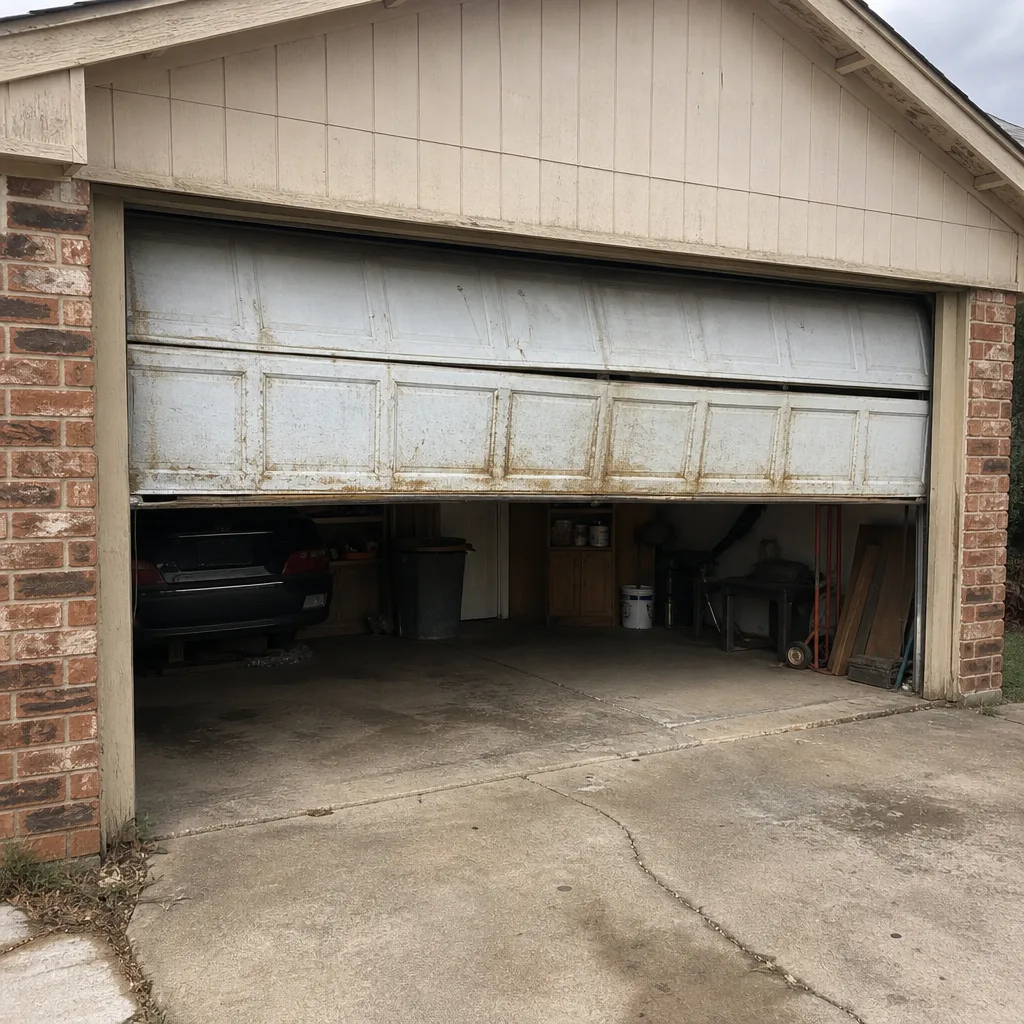 Before
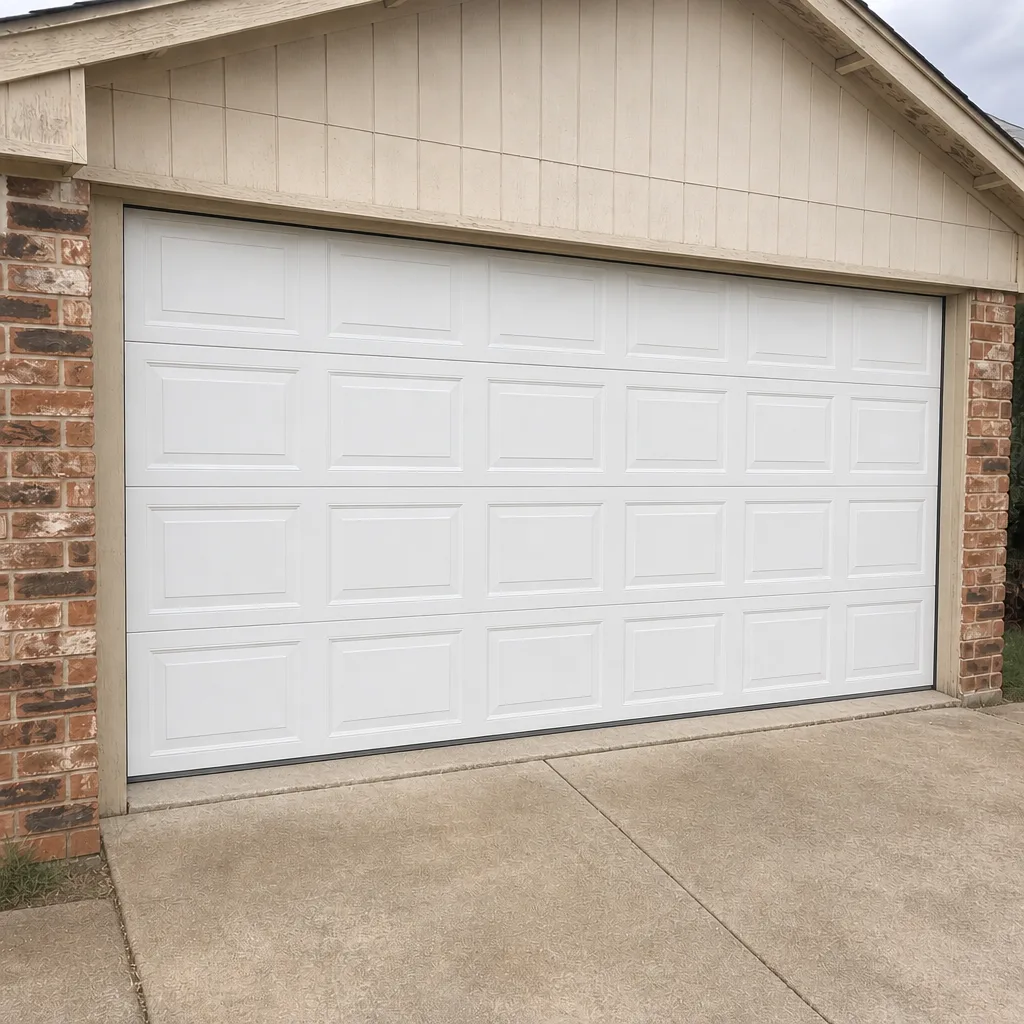 After
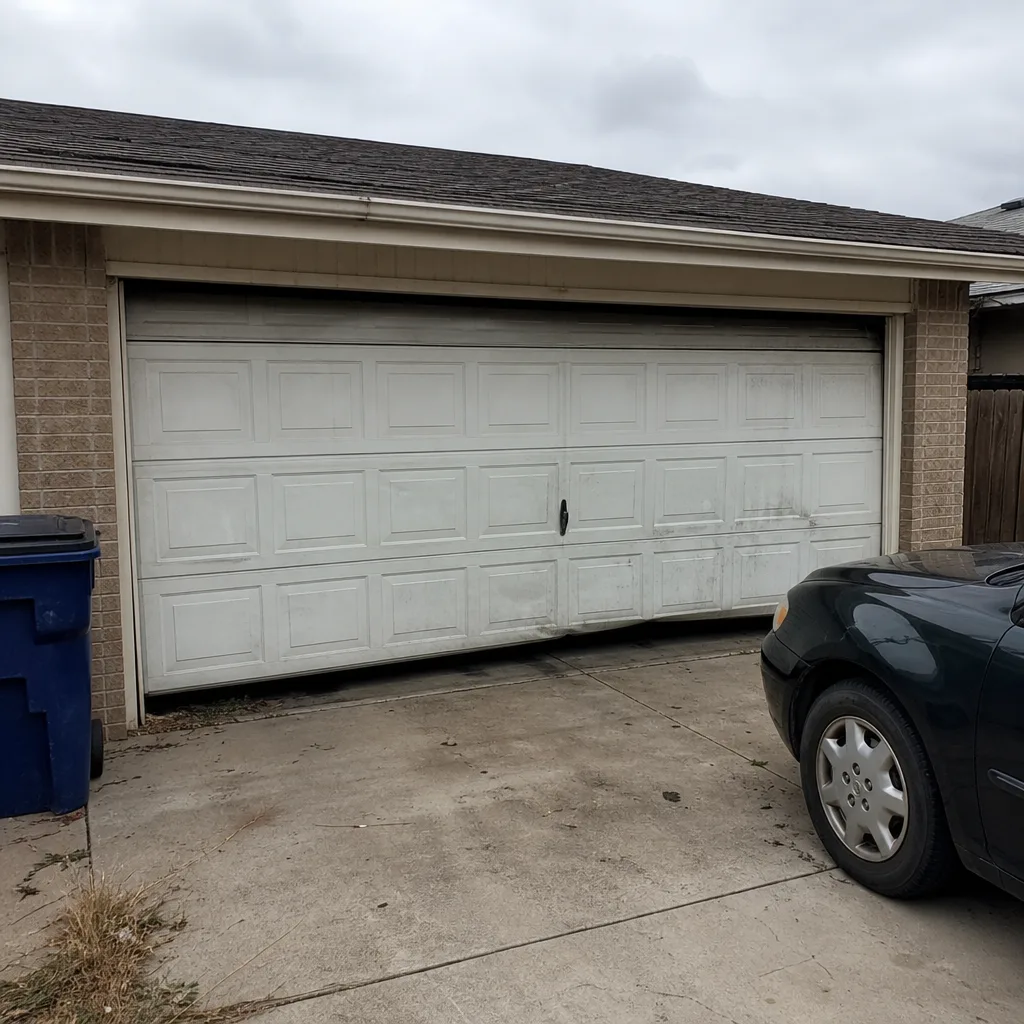 Before
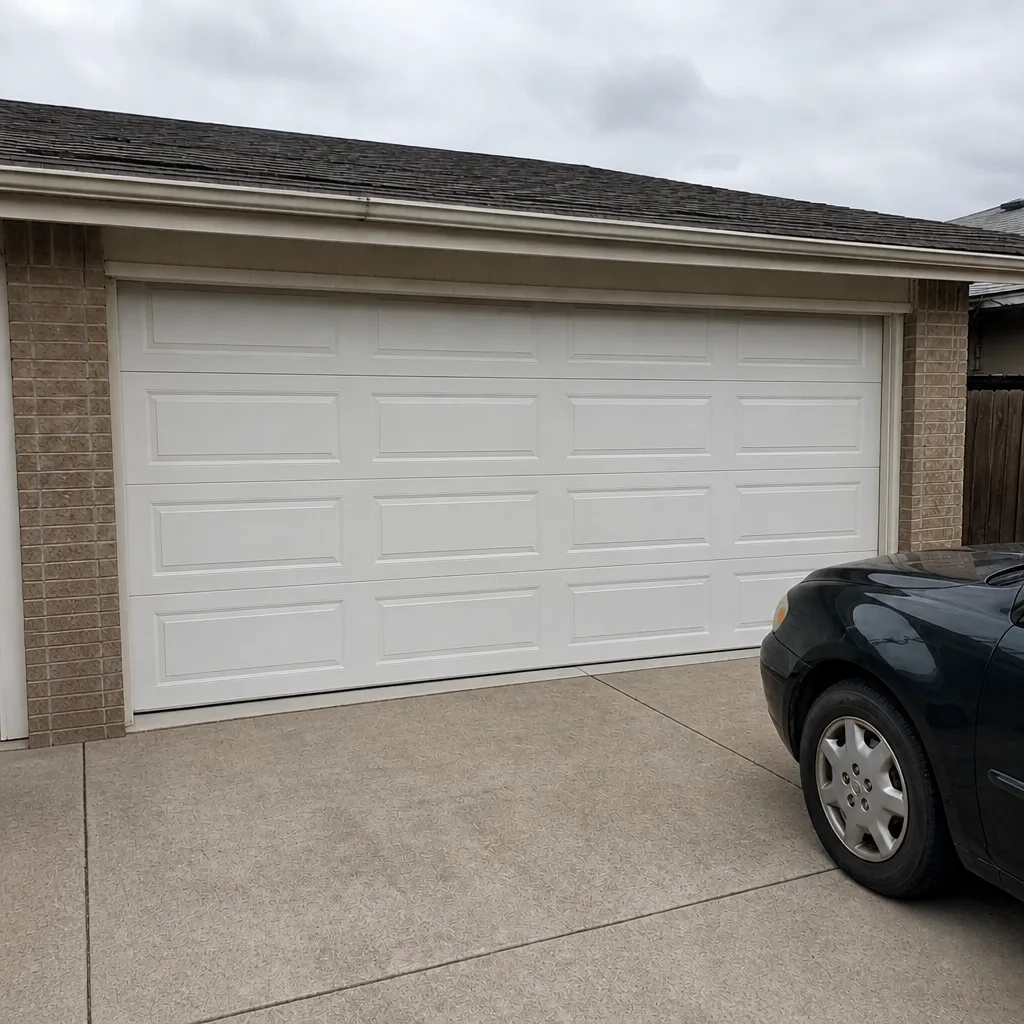 After
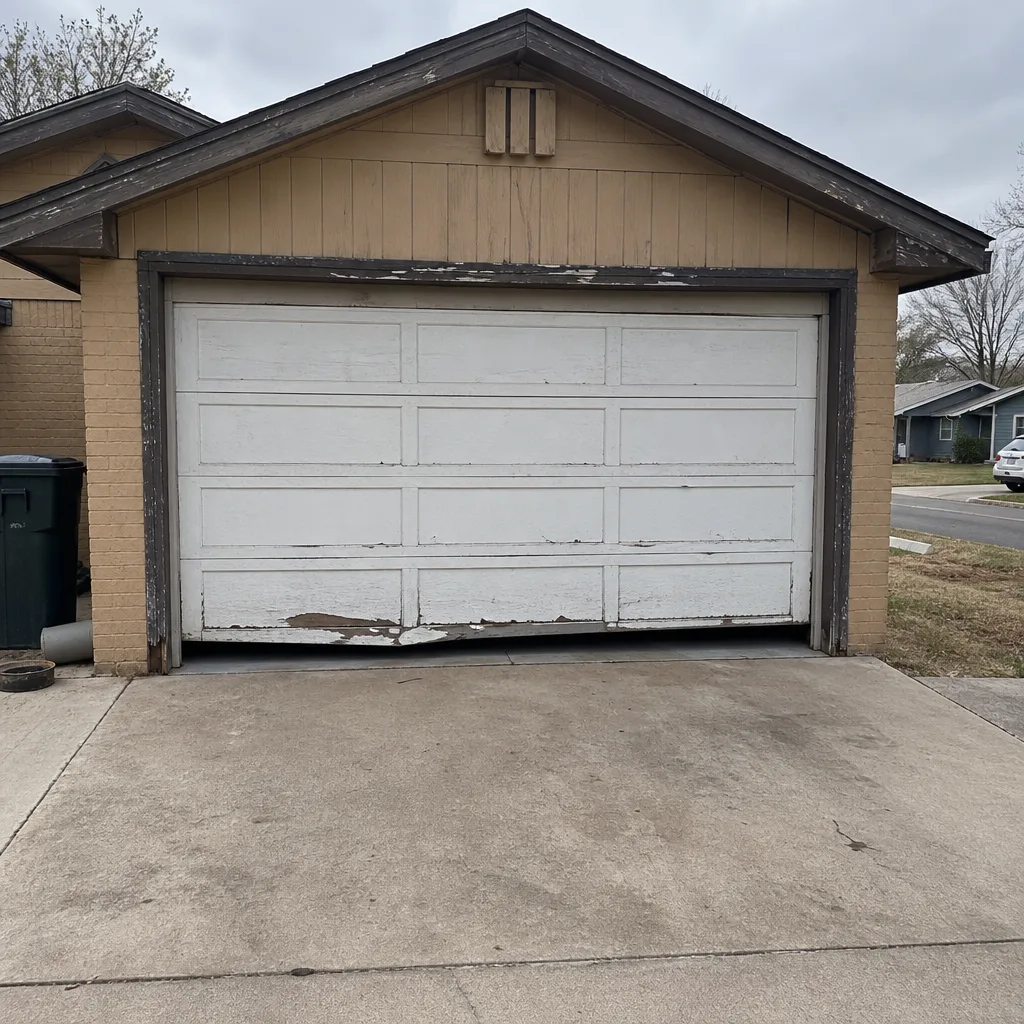 Before
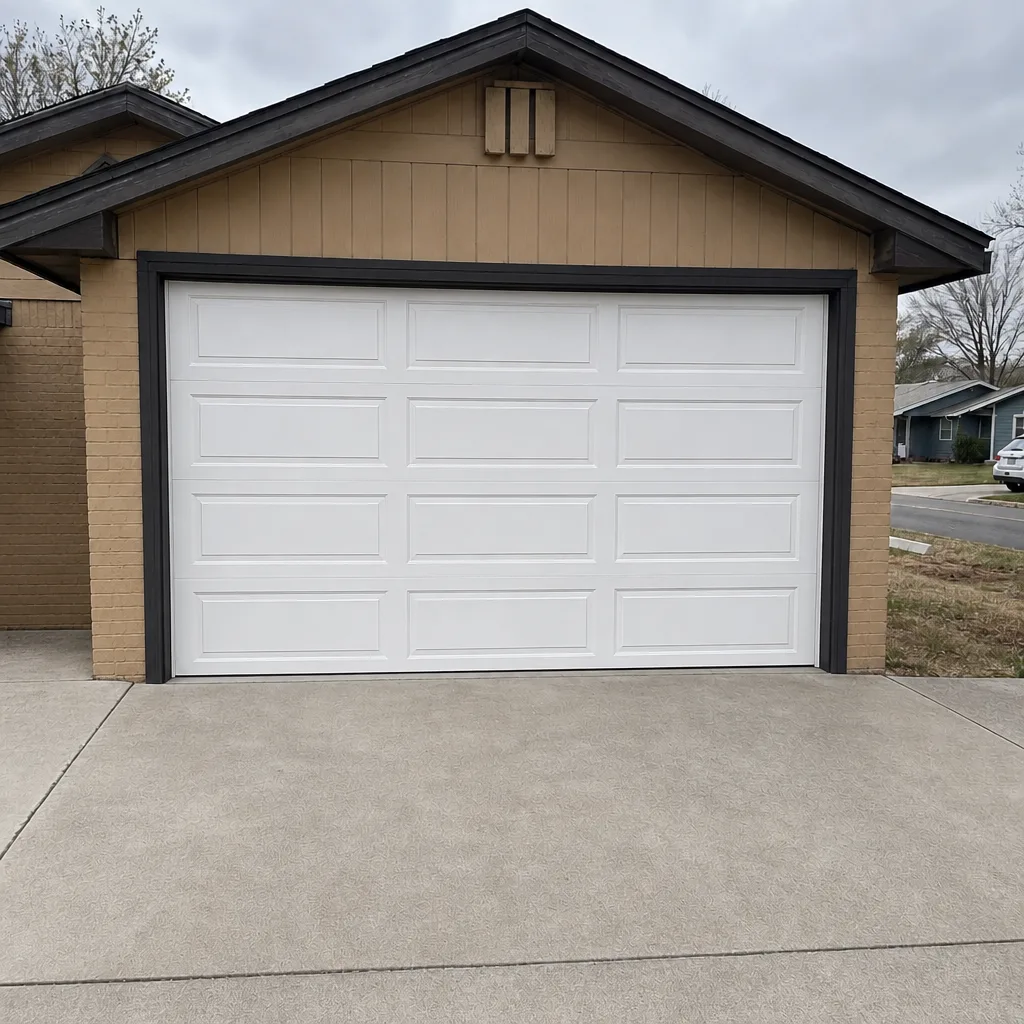 After
When to Call a Professional
Call a professional when the task involves springs, cables, or any form of stored tension. Call when the door has come off its track, when a panel is bent, or when the opener’s safety reverse feature isn’t working. Call when you’ve already attempted a repair and the door behaves worse than before, and call when you’re not sure what the problem is, because a wrong guess around a garage door is expensive.
None of this means a skilled homeowner shouldn’t handle routine upkeep. It means knowing where the line sits and respecting it. Our technicians have up to 9 years of experience, and we work on doors and openers from all eight leading brands, so the diagnosis won’t get stuck on the model.
Nautilus Garage Door Repair offers free estimates in Midland. Call (844) 904-1321. We answer 24/7. Fast dispatch from 7am to 7pm, Sunday through Friday.
Frequently Asked Questions
No. A torsion spring stores enough energy when wound to cause a serious injury in under a second, and that risk doesn’t change with mechanical experience. Springs, cables, and drums should always be handled by a technician with the right winding tools and the training to use them. Call (844) 904-1321 for an exact quote; estimates are free.
Spring replacement is quoted per job, and the price depends on the spring size, the door’s weight, and whether one spring or a matched pair is being replaced. The written estimate you receive sets the final price, and it’s agreed before any work starts. Call (844) 904-1321 for an exact figure; estimates are free.
Same-day service is often possible for repair calls, and the fastest way to find out is to call. We answer 24/7, and dispatch runs from 7am to 7pm, Sunday through Friday. Call (844) 904-1321 and we’ll tell you what’s available.
Weatherstripping, sensor cleaning, track wiping, routine lubrication, and tightening visible fasteners are all reasonable homeowner work. Anything involving spring tension, cables, or opener force settings should go to a specialist. If you’re unsure which category a task falls into, that’s the moment to ask before you start.
No. The written estimate is the price, and it’s set before any work starts. If the diagnosis turns up something the estimate didn’t cover, we’ll tell you before we do that work so you can decide. You’ll never get an invoice bigger than what you agreed to.
In most cases, yes. We work on doors and openers from LiftMaster, Chamberlain, Genie, Clopay, Amarr, Wayne Dalton, Craftsman, and Raynor, so an existing system is usually something we can diagnose and repair rather than replace. Call (844) 904-1321 and tell us the brand; estimates are free.
The Bottom Line
The question isn’t whether you’re handy enough to work on a garage door. It’s whether the task forgives a mistake. Weatherstripping, sensor cleaning, and lubrication forgive. Springs, cables, and force settings don’t. Midland heat adds a timing layer, because adjustments made at peak summer temperature may not hold once it cools. If you’ve already taken a repair on, tell the technician exactly what you did; that saves time and leads to a faster diagnosis. Do the routine work yourself, respect the line at stored energy, and call in a specialist when the task stops forgiving.
When that line is closer than you expected, we’re a phone call away. Reach the team at Nautilus Garage Door Repair at (844) 904-1321 for a free estimate. We answer 24/7. Fast dispatch from 7am to 7pm, Sunday through Friday.
Written by the team at Nautilus Garage Door Repair.