
Last updated November 14, 2026
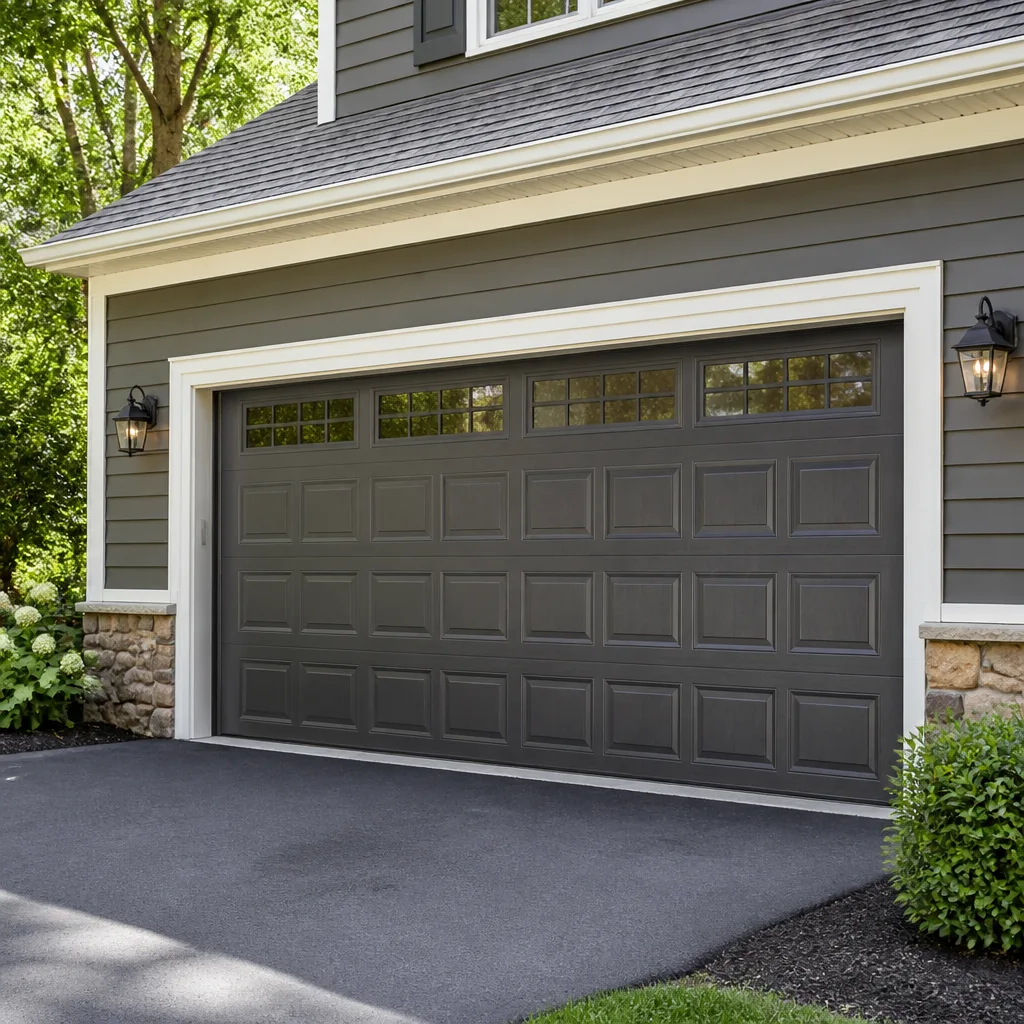 Raised-panel steel
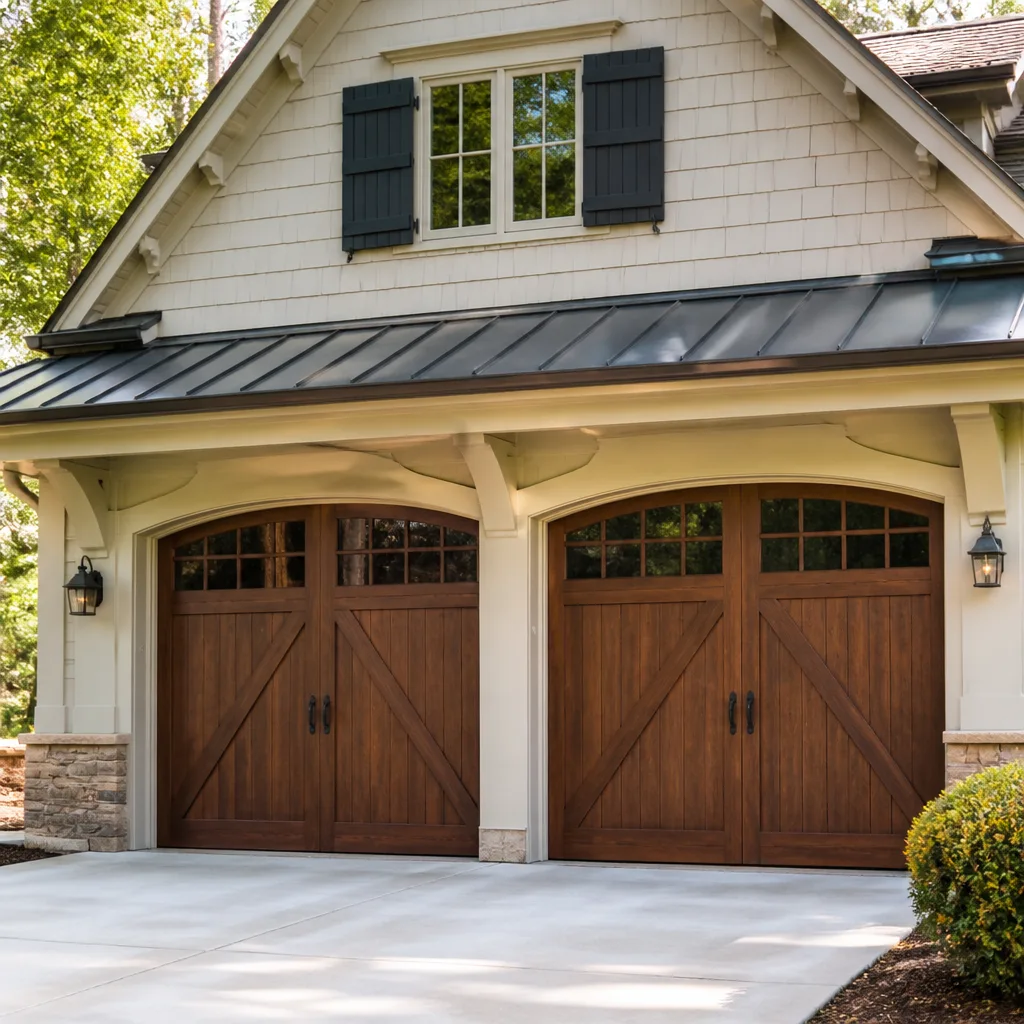 Carriage house
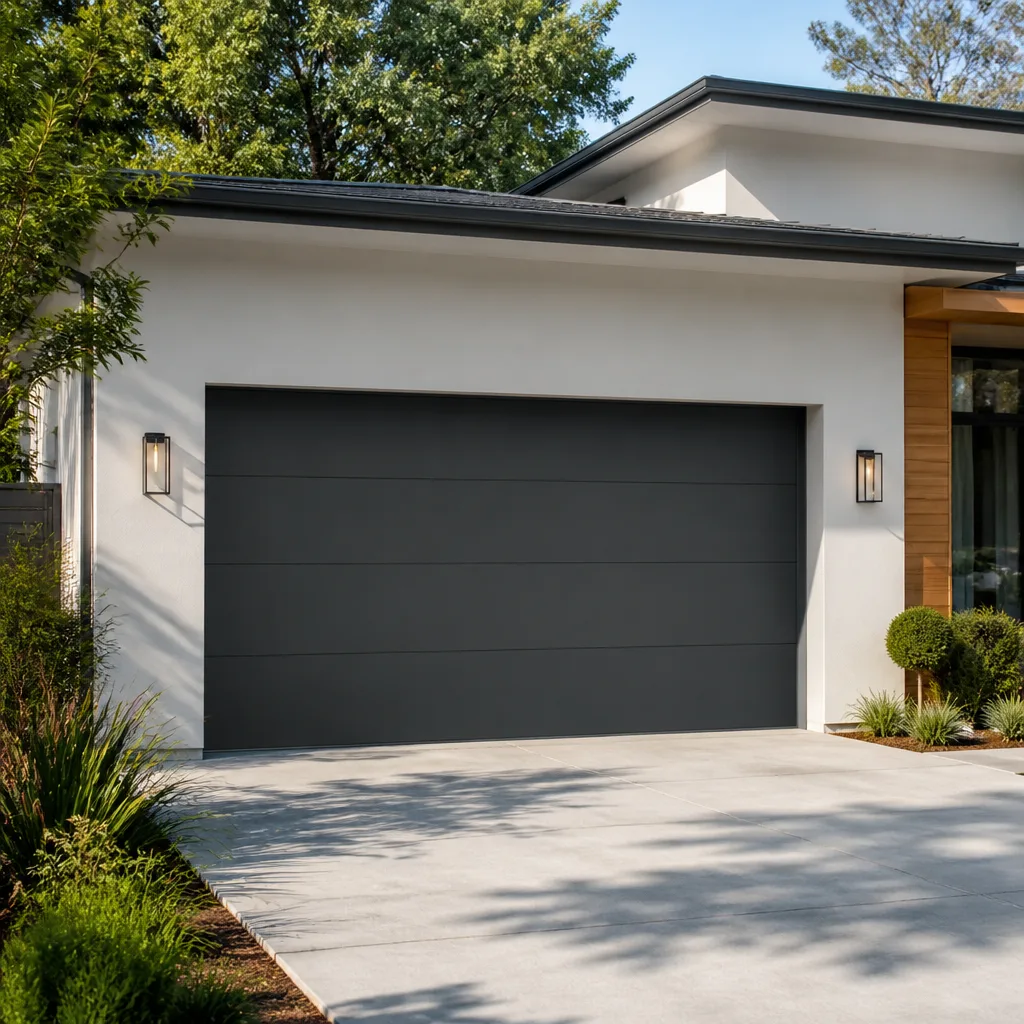 Modern flush
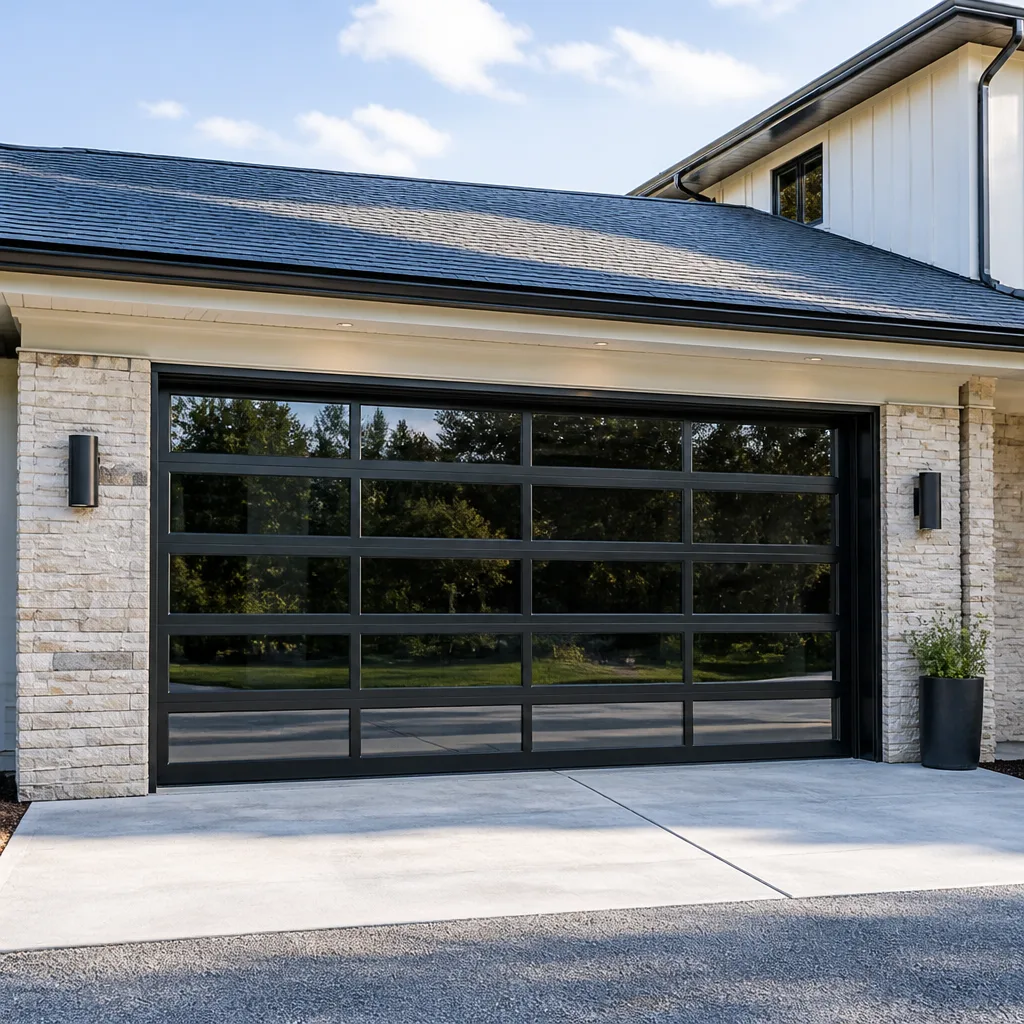 Full-view glass
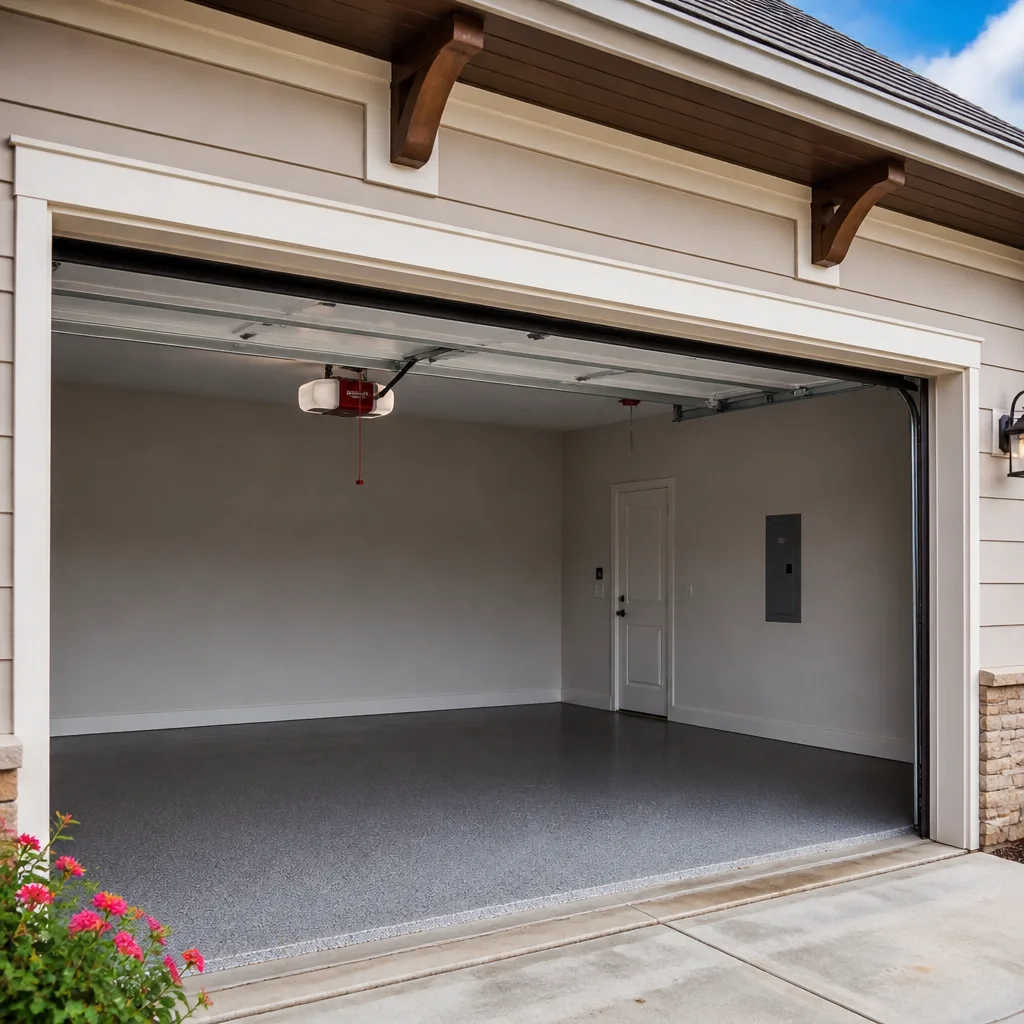 LiftMaster openers
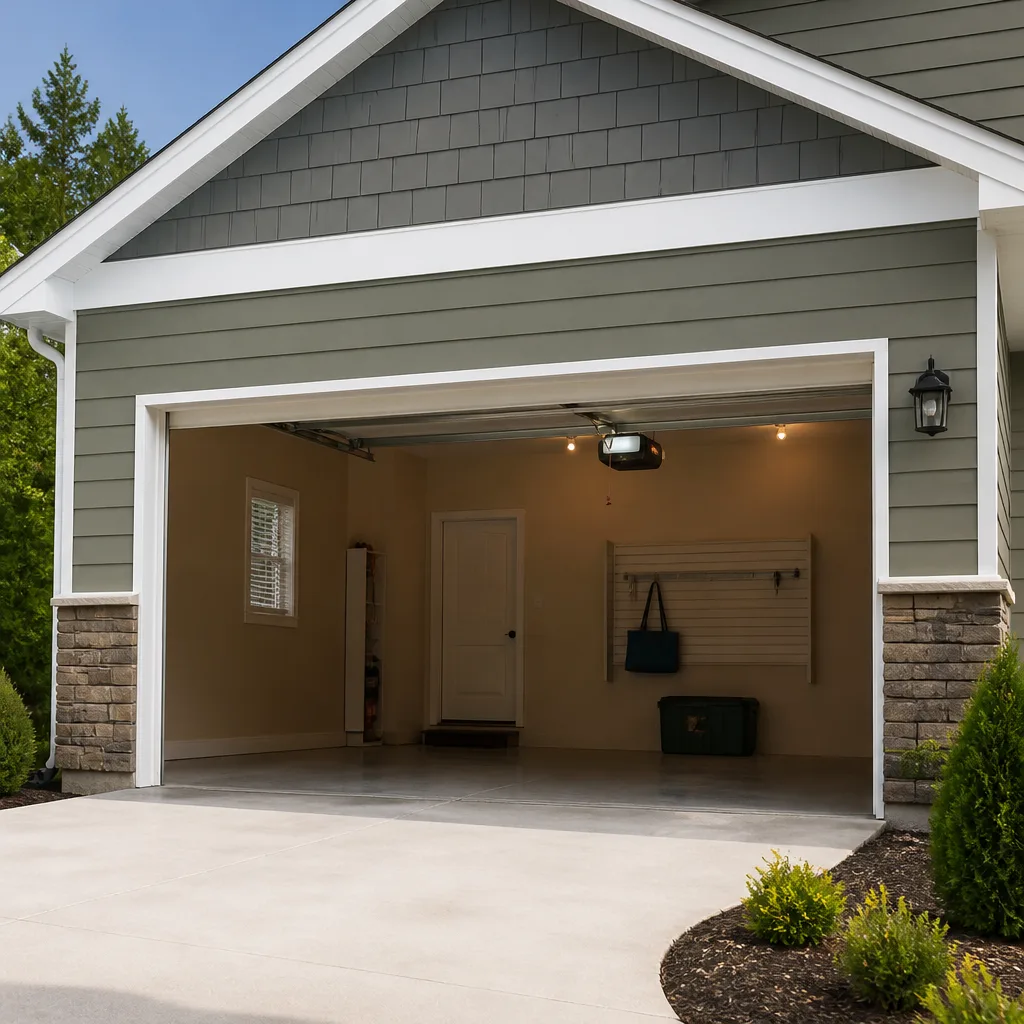 Chamberlain openers
Full 25-point door and opener safety check with every visit - springs, cables, rollers, tracks, and your LiftMaster or Chamberlain opener included
You get a price before we start. It does not change when the pro arrives.
Get your free estimateGarage Door Emergency Preparedness Guide for Midland Homes
Most garage door emergencies don’t start with a mechanical failure. They start with something simpler: a manual release cord that was never tested, a bottom seal stuck to the slab, an opener that will disengage fine in your hand but won’t budge when you actually need it. The counterintuitive part is that the door itself is rarely the weak link. The prep around it is. Midland’s climate stacks the deck, too. Rare hard freezes can lock a seal to concrete; long summer outages turn a closed garage into an oven; and an extended absence can leave a door that won’t close as an open invitation. This guide covers the protocols that turn each of those from a crisis into a manageable inconvenience, written for homeowners who depend on their door every day.
Quick Answer
A garage door emergency in Midland is manageable if you know three things in advance: how your manual release works and that it’s actually functional, why a door with a broken spring must stay down until it’s repaired, and how to secure an opening door before you leave the house unoccupied. Test the release twice a year, keep a silicone-based lubricant and a pair of locking pliers in the garage, and call a specialist when the failure is mechanical rather than environmental.
Styles & brands we work with
- Raised-panel steel
- Carriage house
- Modern flush
- Full-view glass
- LiftMaster openers
- Chamberlain openers
Table of Contents
- The Manual Release: Your First Line of Defense
- When the Power Fails in a Midland Summer
- Freeze Protocol for Midland’s Rare Severe Cold
- Broken Spring: Why the Door Stays Down
- When a Door Won’t Close and You’re Leaving Town
- The Two-Item Emergency Kit Every Midland Garage Needs
- What to Do Before You Call for Help
The Manual Release: Your First Line of Defense
The manual release is the single most important piece of safety equipment in your garage, and it’s the one most homeowners have never touched. It’s a cord, usually red, hanging from the trolley that connects your opener to the door. Pulling it disengages the opener so the door can be operated by hand. It sounds simple. It is, until the cord hasn’t moved in five years and the trolley has seized from dust and lack of use.
The release mechanism itself is mechanically straightforward. The trolley slides along a rail, and the release lever pivots a spring-loaded catch that frees the door from the drive chain or belt. When the catch is stiff from disuse, pulling the cord does nothing visible. You’ll feel tension, then nothing. The door stays locked to the opener and you’re stuck.
Testing it takes about two minutes and should happen twice a year. Here’s the sequence:
- Close the door and confirm the opener has finished its cycle.
- Stand clear of the door’s path and pull the release cord firmly downward.
- Lift the door about a foot by hand. If it moves freely, the release worked.
- Reconnect by pulling the cord again or running the opener briefly until the trolley re-engages.
If the door won’t move by hand after you pull the cord, the release has seized. That’s a repair, not a maintenance item, and it should be addressed before you need it. In our experience, seized releases are far more common on doors that get regular use but no periodic testing. The mechanism doesn’t fail from wear; it fails from sitting still. A technician can free the trolley, check the catch spring, and confirm the door balances correctly by hand. That last part matters, because a door that’s badly out of balance can drop once you disengage the opener. If you’ve tested your release and it’s stuck, a garage door repair visit is the right call.
When the Power Fails in a Midland Summer
A summer outage in Midland is not a minor inconvenience. It’s a situation where the garage can reach interior temperatures well above the outdoor reading within an hour, and the vehicle inside is trapped unless the manual release works. This is why the release test matters more here than it might in a milder climate. The failure mode isn’t the outage. It’s discovering the release is seized at the exact moment you need it.
Every opener has a battery backup option, and if yours is a LiftMaster or Chamberlain unit, it may already have one. The battery holds the door functional through a short outage, letting you open and close normally. It doesn’t last forever, though, and a battery that’s never been tested is a battery you can’t count on. Most units have a test button; the owner’s manual walks you through it. Run that test at the start of summer.
If you don’t have battery backup and the power is out, the manual release is your only route. Here’s the safe sequence:
- Pull the release cord firmly and confirm the door is free of the opener.
- Lift the door slowly by hand to about waist height, then let it settle. A balanced door should stay roughly where you leave it.
- Raise it fully and prop or hold it clear of the path before moving a vehicle.
- Lower it gently after the vehicle is out, and don’t force it if it binds.
One caution: a door that’s out of balance, or one with a weakening spring, can come down hard once the opener is disengaged. If the door feels heavy when you lift it, don’t stand underneath it. Get the vehicle out if you can do so safely, then leave the door down until a technician checks the spring tension. For openers that won’t respond even with power restored, garage door opener repair covers the diagnostic side. Craftsman and Raynor units from older installs are common in Midland garages, and both are serviceable.
Freeze Protocol for Midland’s Rare Severe Cold
Midland doesn’t see many hard freezes, which is exactly why they cause problems. The bottom seal, a rubber or vinyl strip that runs along the base of the door, sits directly on the concrete slab. When temperatures drop far enough for long enough, moisture between the seal and the slab freezes and bonds the two together. The opener then strains against a door that’s physically stuck to the floor.
The instinct is to hit the button again and hope it breaks free. Don’t. Repeated cycles put stress on the opener’s gears, the drive belt or chain, and the door’s hinges. A door that’s frozen to the slab won’t open no matter how many times you press the remote, and the strain can turn a minor freeze into a mechanical repair.
Here’s how to free a frozen seal without damaging the door or the floor:
- Disengage the opener using the manual release cord. This takes the motor out of the equation.
- Inspect the seal line. Look for visible ice bonding the rubber to the concrete.
- Apply warm (not hot) water along the seal line with a watering can or a spray bottle on a warm setting. Work in sections.
- Wait a minute or two, then gently lift the door by hand. If it releases, raise it fully and leave it up until the ice melts.
- Never chip at the ice with a shovel, scraper, or anything metal. You’ll tear the seal and possibly gouge the slab.
Once the door is free, dry the seal and the slab with a towel. A light coat of silicone-based lubricant on the seal’s contact edge helps prevent the next freeze from bonding as tightly. If the door is already up and you’re expecting another cold night, leave it up. A door left open overnight is safer than a door frozen shut in the morning. If the opener strained during the freeze and now sounds rough or runs unevenly, that’s worth a diagnostic visit. A Nautilus Garage Door Repair technician can check the drive assembly and confirm nothing was damaged.
Broken Spring: Why the Door Stays Down
A broken torsion spring announces itself with a sharp bang, and the door becomes immovable. The spring is what counterbalances the door’s weight, and without it, a standard double-car door can weigh well over a hundred pounds. Lifting it by hand is possible in theory and dangerous in practice, because the door can come down without warning and there’s nothing holding it up.
The rule is simple: leave the door down. Don’t force it open. Don’t try to lift it manually to get a vehicle out. Don’t prop it with a broom handle. The spring stores an enormous amount of energy, and a snapped spring can have jagged ends that catch on cables and hardware. This is genuine high-tension equipment, and working on it without the right tools and training is how people get seriously hurt. This is one of the few garage door jobs where we tell homeowners, plainly, not to touch it.
That leaves a logistical problem: the car is inside and the door won’t open. Here’s what to do:
- Check for a second exit. Many Midland homes have a side door from the garage to the house. Use it.
- Disengage the opener if it’s still running. The motor will keep trying to lift a door it can’t move, which can burn out the opener. Pull the release cord to take it out of the loop.
- Move vehicles that are outside. If a car is already out, park it clear of the garage so the service vehicle has access.
- Arrange for a same-day call. Spring replacement is a repair, and a trained technician can handle it in a single visit with the correct spring size and winding bars.
If you’re not sure whether the spring is broken or the opener has failed, look at the door. A door that’s hanging slightly crooked, or one that lifts a few inches and stops, usually points to a spring. A door that doesn’t respond to the remote at all, but moves freely when disengaged, points to the opener. The distinction matters for the call you make. We answer 24/7. Fast dispatch, 7am-7pm, Sunday through Friday.
When a Door Won’t Close and You’re Leaving Town
A door that won’t close is a security problem with a deadline. If you’re leaving Midland for a trip and the door won’t come down, you need a temporary measure that secures the opening without creating a new hazard or a repair bill for the next person who touches it.
First, figure out why it won’t close. The most common causes:
- Something in the safety sensor beam. A leaf, a cobweb, a shifted sensor bracket, or sunlight hitting the receiver directly can all trip the beam. The door goes down a few inches and reverses.
- A misaligned or dirty sensor lens. Wipe both lenses with a soft cloth and check that they point at each other squarely.
- A binding track or a worn roller. The door starts down and stops because something is dragging.
- A limit switch that’s out of adjustment. The opener thinks the door has reached the floor before it has.
If the sensor is the issue, you can usually resolve it in five minutes. If the door still won’t close, don’t force it with the opener repeatedly. That burns out the motor and can damage the drive assembly. Instead, close the door manually by disengaging the opener and lowering it by hand. If the door won’t close by hand either, the problem is mechanical.
For temporary security before you leave, a few practical options:
- Lower the door as far as it will go by hand, then slide a heavy bar or a piece of lumber through the track on the inside to hold it in place. This isn’t a permanent fix, but it prevents the door from being lifted from outside.
- If the door is fully open and can’t be moved, secure the opening from the inside with a temporary barrier and lock the interior door that connects the garage to the house.
- Move anything valuable out of the garage before you go.
- Ask a neighbor to keep an eye on the house, and let them know a technician may be visiting.
None of these are substitutes for a repair. The safest move is to schedule the fix before you leave. A door that won’t close is also a door that won’t open correctly when you return, and the last thing you want after a long trip is to pull into your driveway in Midland and find the door stuck. If you’re heading out of town and the door won’t cooperate, call before you go. The estimate is free.
The Two-Item Emergency Kit Every Midland Garage Needs
Most garage door emergencies aren’t mechanical failures. They’re environmental: a stuck seal, a sensor blocked by debris, a door that needs to be operated by hand. A two-item kit resolves the large majority of those without a service call. The specific items matter more than the quantity.
Item one: a silicone-based garage door lubricant. Not WD-40, not white lithium grease, not cooking spray. A purpose-made silicone lubricant, in a spray can, applied to the hinges, rollers, torsion spring (lightly, on the coils, never on the winding bars), and the bottom seal’s contact edge. This does three things: it keeps the door moving smoothly, it reduces the chance that the bottom seal bonds to the slab in a freeze, and it quiets the door so you’ll notice new noises before they become failures. Apply it twice a year. A can lasts a long time.
Item two: a pair of locking pliers. Not for the springs. For everything else. Locking pliers let you grip a seized manual release cord, hold a track alignment in place while you check it, or clamp a sensor bracket that’s shifted. They’re the tool you’ll reach for when something that should move doesn’t. A small adjustable wrench is a reasonable addition, but the pliers are the non-negotiable one.
Together, those two items handle the environmental emergencies: the seized release, the frozen seal, the sensor that needs a quick realignment. They don’t fix a broken spring, a failed opener, or a bent track. Those are mechanical failures, and they need a specialist. The point of the kit isn’t to replace a technician. It’s to make sure the emergencies that don’t need one don’t turn into a service call at the worst possible moment. It’s also worth having a flashlight in the garage that isn’t dependent on a phone battery, particularly in a Midland summer when the power can go out.
What to Do Before You Call for Help
When something goes wrong, a few quick observations help the technician diagnose the problem before they arrive, which means a faster, more accurate repair.
- Note what the door does when you press the button. Does it move at all? Does it move a few inches and reverse? Does the opener hum but nothing happens? Each points to a different failure.
- Test the manual release if it’s safe to do so. If the door moves freely by hand once disengaged, the opener is the likely problem. If it’s heavy or binds, the issue is in the door’s mechanicals.
- Look at the springs. A visible gap in a torsion spring above the door is a confirmed break. Don’t touch it, but note it for the call.
- Check the sensors. Are both lenses clean? Are they aligned? Is there anything in the beam’s path?
- Listen. Grinding, squealing, or a rhythmic clicking all tell the technician something specific.
The more of that you can report, the more likely the technician arrives with the right part. For opener issues specifically, knowing the brand helps. Midland garages run the full range, from legacy Craftsman units to current LiftMaster and Chamberlain systems, and each has its own diagnostic path. We work on all of them, along with Genie, Clopay, Amarr, Wayne Dalton, and Raynor, so you’ll never hear “we don’t service that brand” when you call.
Common Mistakes to Avoid
- Forcing a frozen door open with the opener. Repeated cycles strain the motor, the drive assembly, and the door’s hinges. Disengage the opener and thaw the seal first.
- Lifting a door with a broken spring by hand. A door without spring tension can weigh over a hundred pounds and drop without warning. Leave it down and call a technician.
- Using the wrong lubricant. WD-40 and grease attract dirt and gum up the tracks. Use a purpose-made silicone lubricant and apply it sparingly.
- Ignoring a door that’s gotten noisy. A new squeal or grind in a Midland garage usually means a worn roller, a dry hinge, or a loose bolt, and catching it early prevents a bigger repair.
- Never testing the manual release. A release that’s seized from disuse is useless in an outage. Test it twice a year, before you need it.
- Leaving the house with the door stuck open. A door that won’t close is a security exposure. Secure it, or schedule the repair before you leave.
- Patching a spring problem with a bigger opener. A stronger motor doesn’t fix a failed spring. It masks the symptom and wears out the opener faster.
See the difference
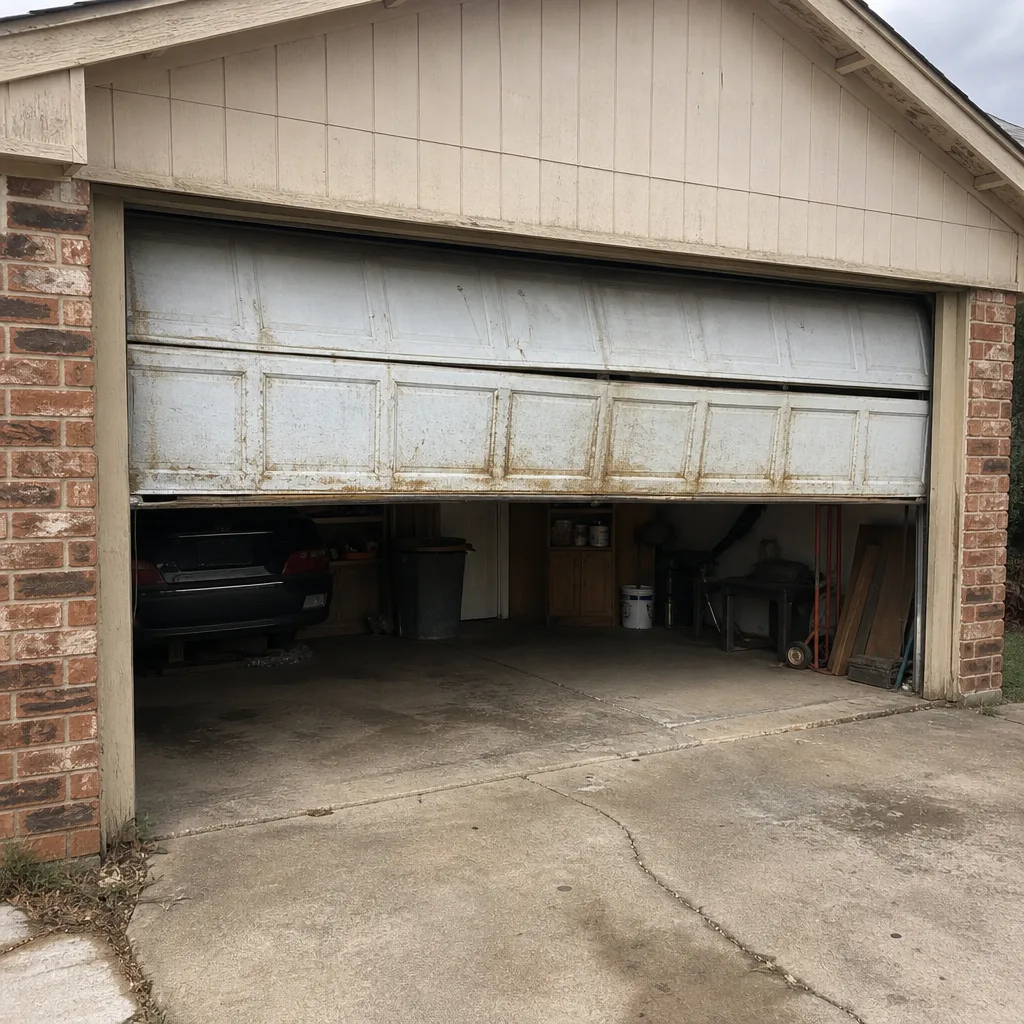 Before
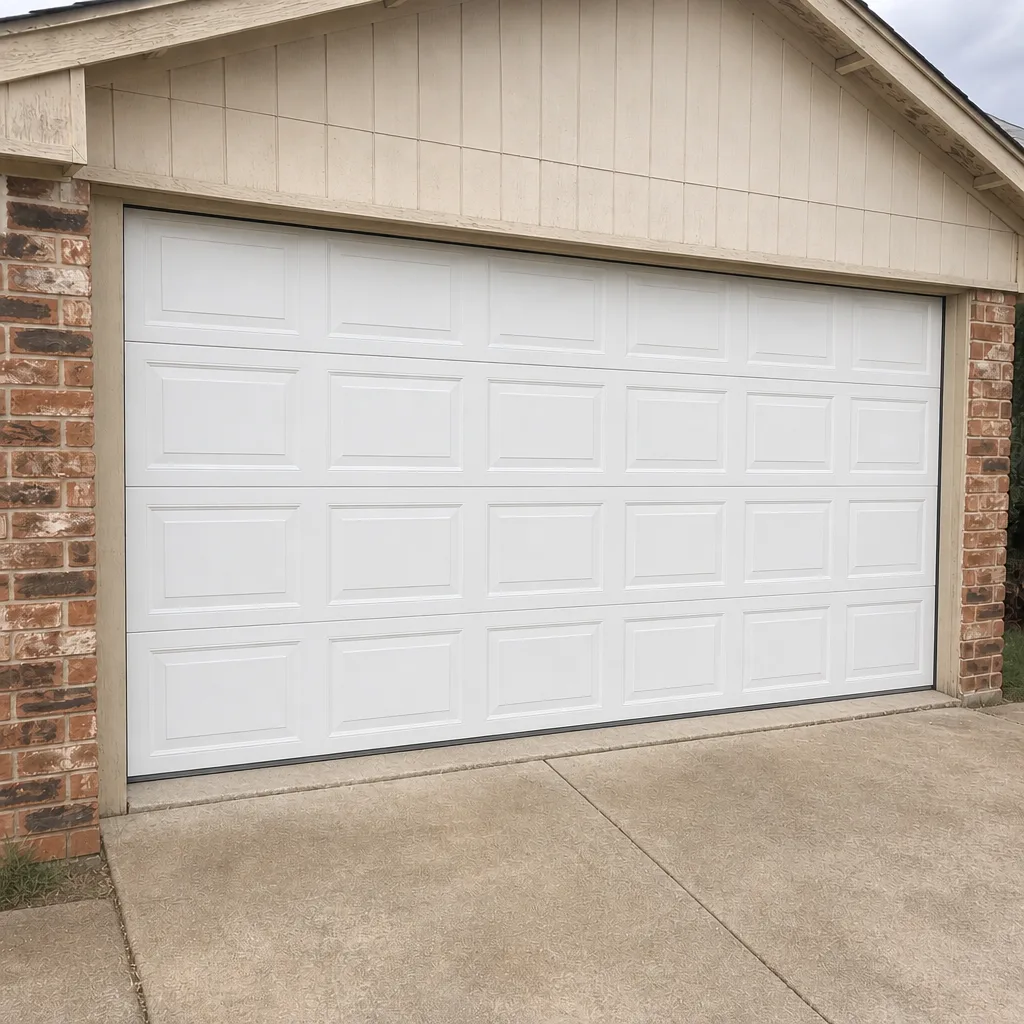 After
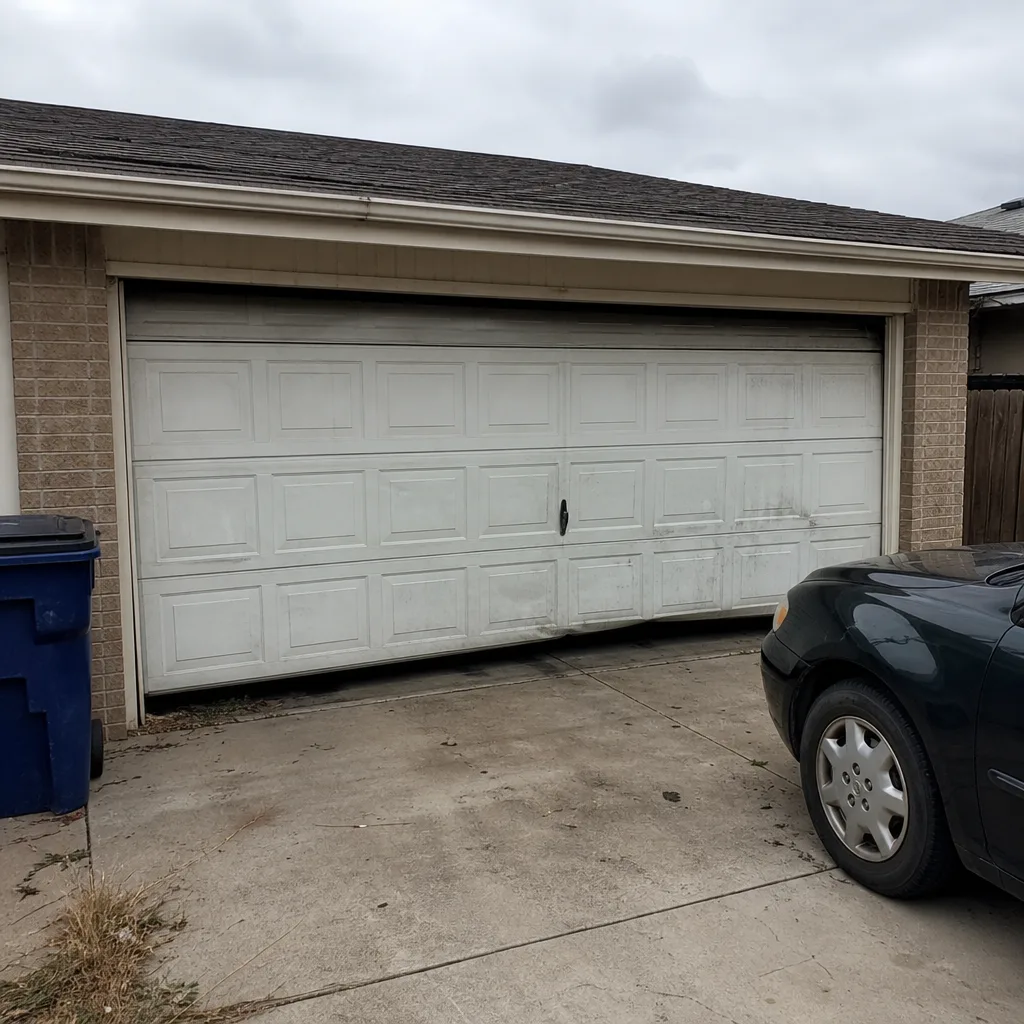 Before
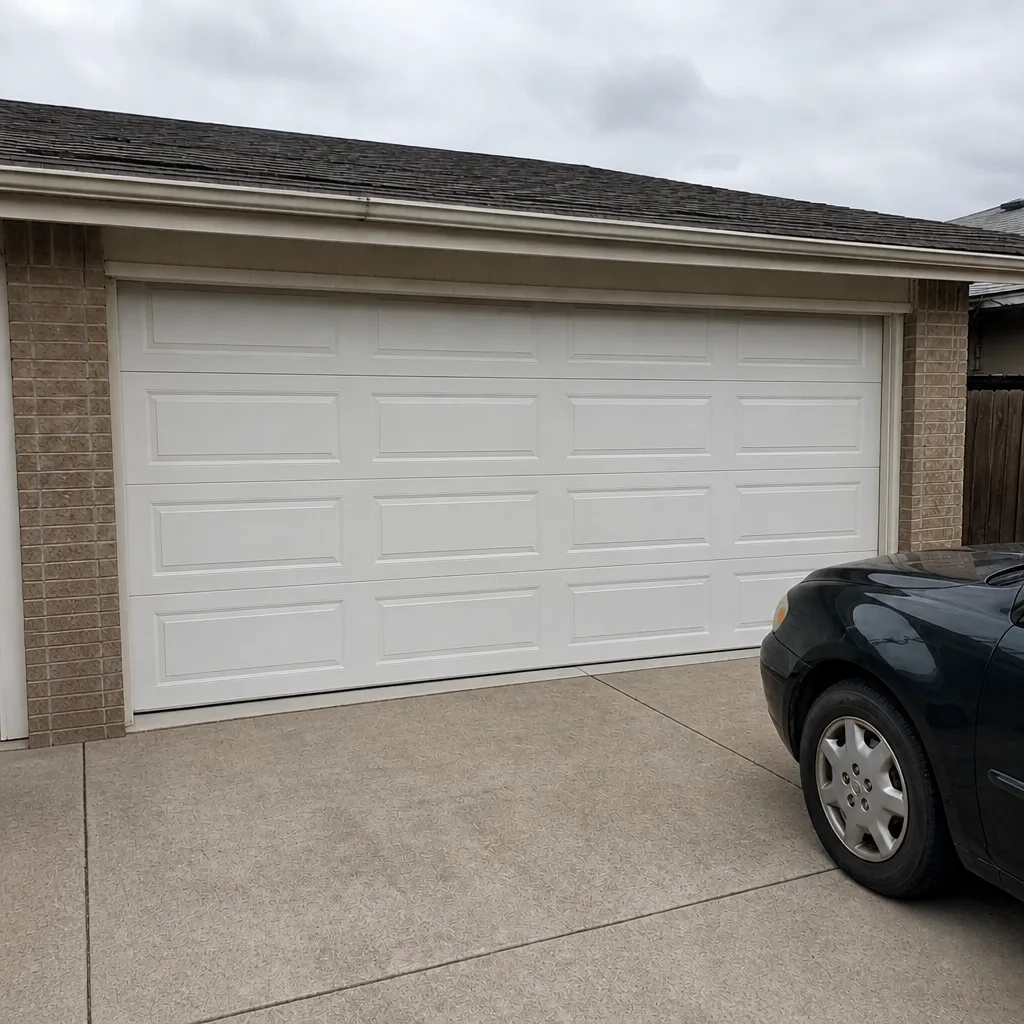 After
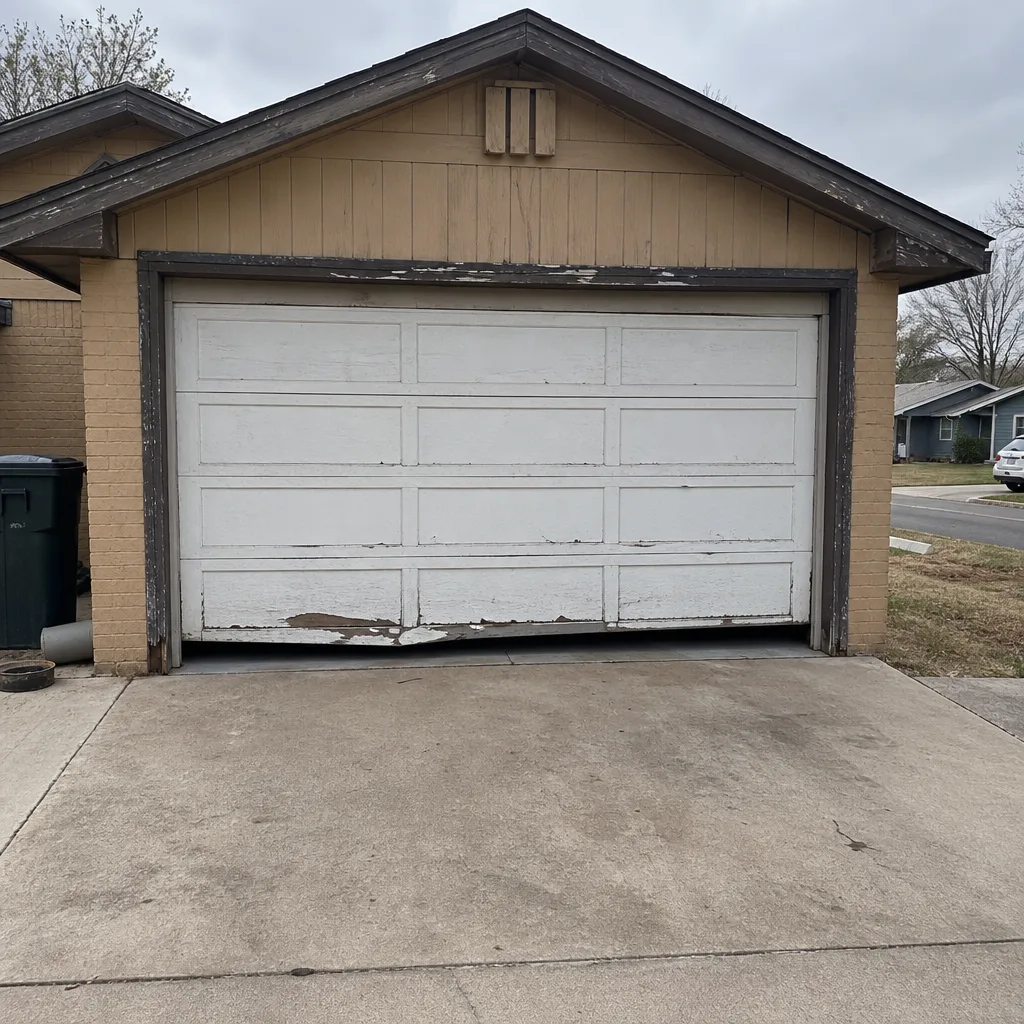 Before
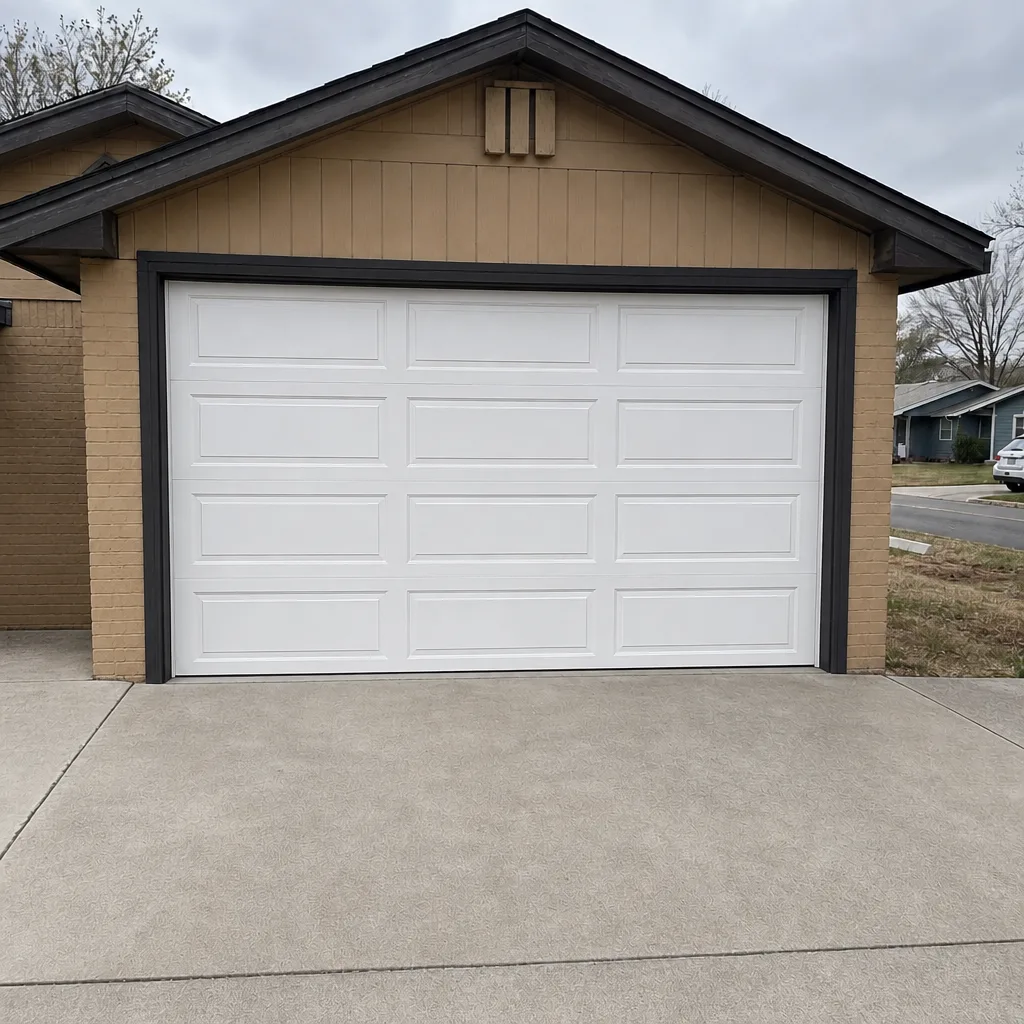 After
When to Call a Professional
Call a specialist when the failure is mechanical: a broken spring, a snapped cable, a bent track, a door that’s come off its rollers, or an opener that runs but won’t move the door. Those are the jobs where the equipment is under tension, the parts are load-bearing, and a mistake can cause injury. Call us when the door won’t close and you can’t leave it secure, or when a freeze or outage has strained the opener and it no longer runs smoothly. For routine issues like a door that won’t close because a sensor is dirty, a quick check might resolve it on its own. But if a second attempt doesn’t work, stop and call. Nautilus Garage Door Repair offers free estimates in Midland – call (844) 904-1321. We answer 24/7. Fast dispatch from 7am to 7pm, Sunday through Friday.
Frequently Asked Questions
Pull the manual release cord to disengage the opener, then lift the door by hand. The cord is usually red and hangs from the trolley. If the door is heavy when you lift it, stop and don’t stand underneath it; the spring may be weak. Test the release twice a year so you know it works before an outage. Call (844) 904-1321 if the release is seized or the door won’t move by hand.
No. A door with a broken spring is unsafe to lift by hand because the spring is what counterbalances the door’s weight. Forcing it can cause the door to drop without warning. Leave it down, use the interior door if you have one, and call for a same-day repair. Call (844) 904-1321. We answer 24/7.
Check the safety sensors first: clean the lenses and clear the beam. If the door still won’t close, disengage the opener and lower it by hand. If it won’t close by hand, secure the opening from the inside and lock the interior door. The safest move is to schedule the repair before you go. Call (844) 904-1321 for a free estimate.
Disengage the opener first, then pour warm (not hot) water along the bottom seal line to melt the ice. Gently lift the door by hand once it releases. Never chip at the ice with metal tools, which can tear the seal and gouge the concrete. Dry the seal afterward and apply a silicone lubricant. Call (844) 904-1321 if the opener was strained during the freeze and now runs rough.
Only if it has a battery backup, which many current LiftMaster and Chamberlain units do. The battery runs the door through a short outage. Without backup, the manual release is your only option. Test the battery at the start of summer so you’re not discovering it’s dead during an outage. Call (844) 904-1321 if you need opener repair.
A purpose-made silicone lubricant and a pair of locking pliers cover most non-mechanical emergencies, including a seized release and a frozen seal. Add a flashlight that runs on its own batteries. These handle environmental issues; broken springs and failed openers need a specialist. Call (844) 904-1321 for mechanical repairs.
The Bottom Line
The garage door emergencies that catch Midland homeowners off guard aren’t the dramatic ones. They’re the tested-but-forgotten release, the frozen seal, the door that wouldn’t close before a trip. Knowing the protocols in advance is what makes the difference. Test your manual release twice a year. Keep silicone lubricant and locking pliers in the garage. Leave a door with a broken spring alone. Free a frozen seal with warm water, never force. Secure a door that won’t close before you leave. And when the failure is mechanical rather than environmental, call a specialist rather than improvising. That’s the whole guide, and it’s enough to turn most emergencies into an inconvenience.
If your door needs attention, call Nautilus Garage Door Repair at (844) 904-1321 for a free estimate. We answer 24/7. Fast dispatch from 7am to 7pm, Sunday through Friday. We work on LiftMaster, Chamberlain, Genie, Clopay, Amarr, Wayne Dalton, Craftsman, and Raynor systems, from a single spring to a full installation. Our technicians have up to 9 years of experience, and every price is quoted and agreed before any work starts.
Written by the team at Nautilus Garage Door Repair.