
Last updated November 14, 2026
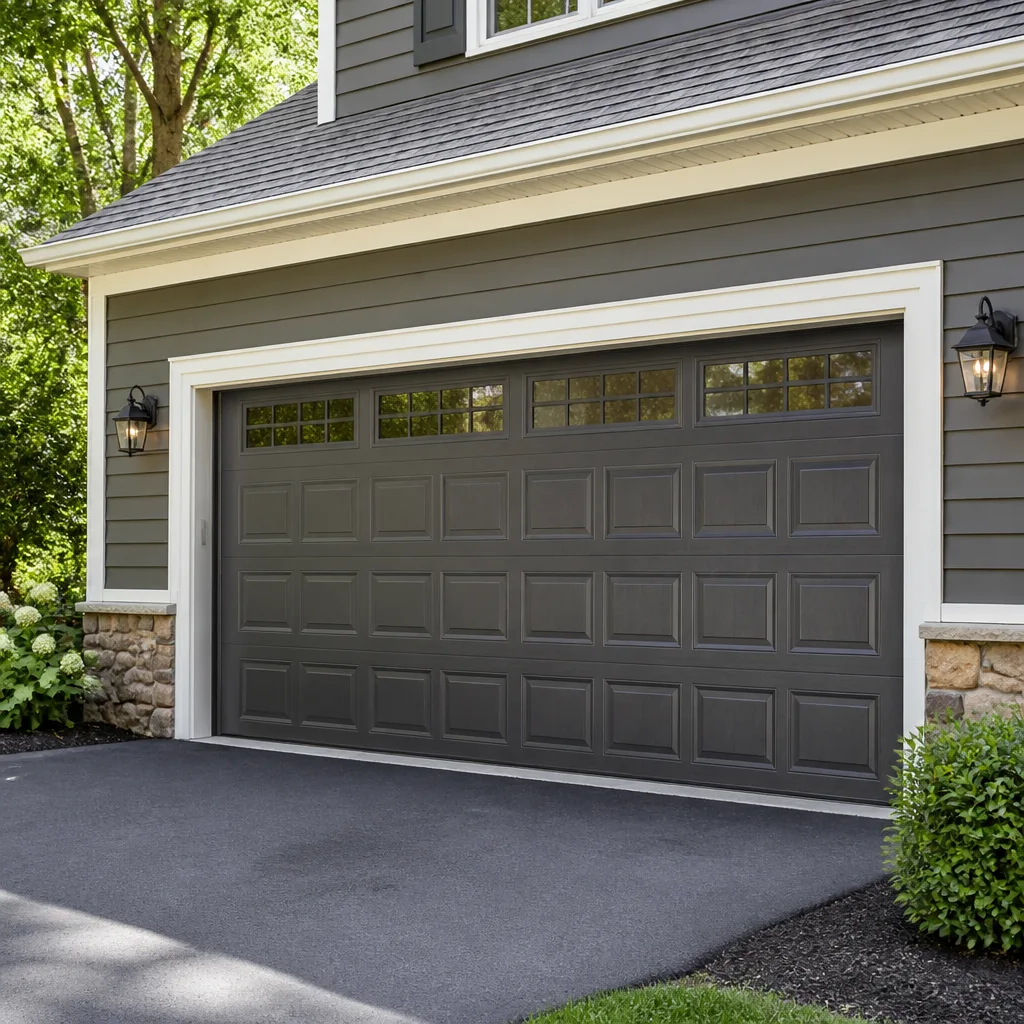 Raised-panel steel
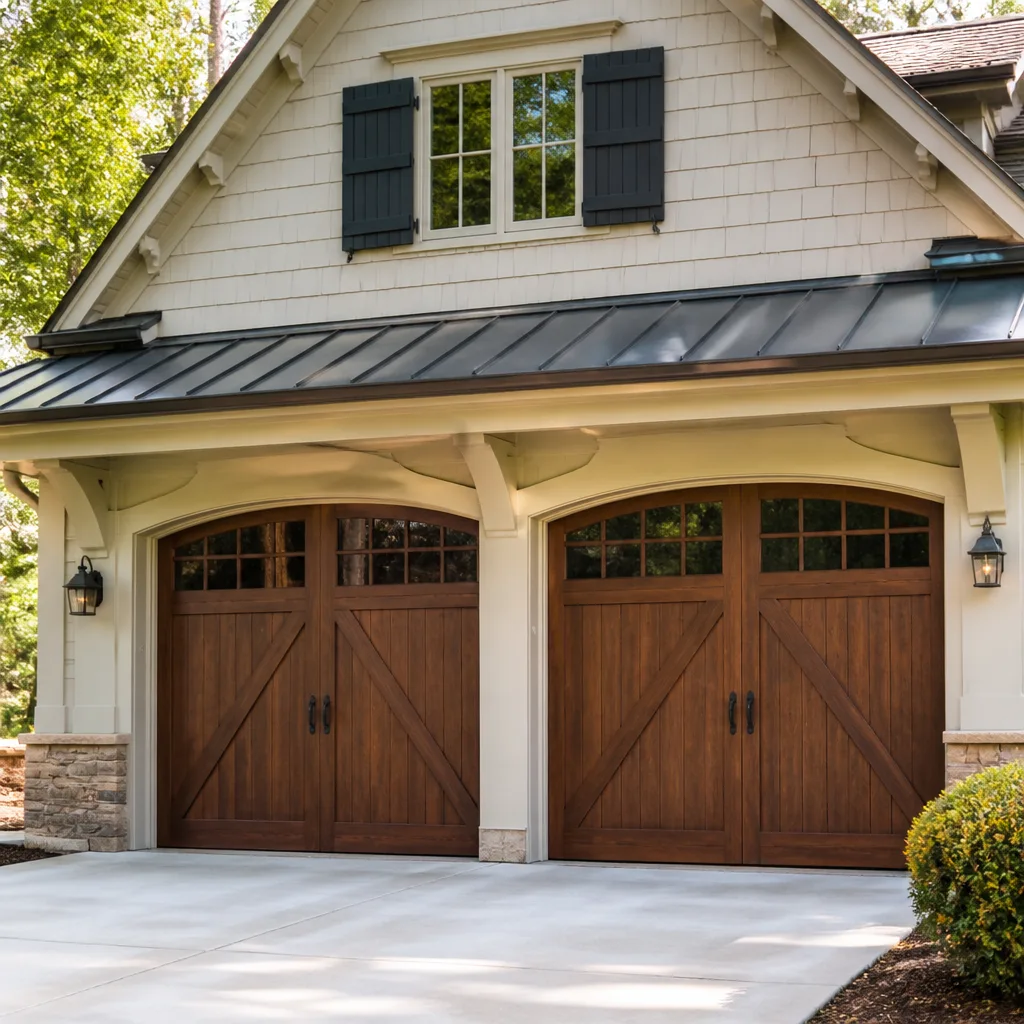 Carriage house
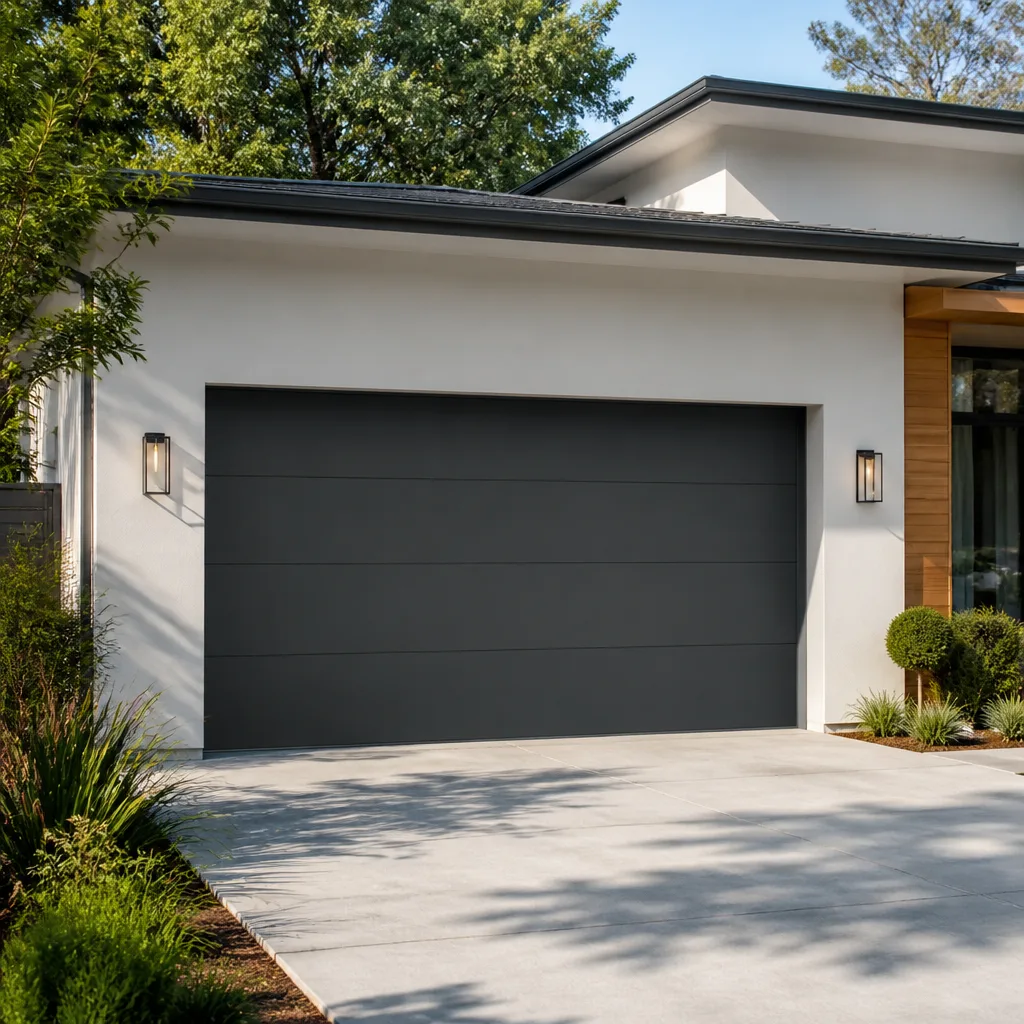 Modern flush
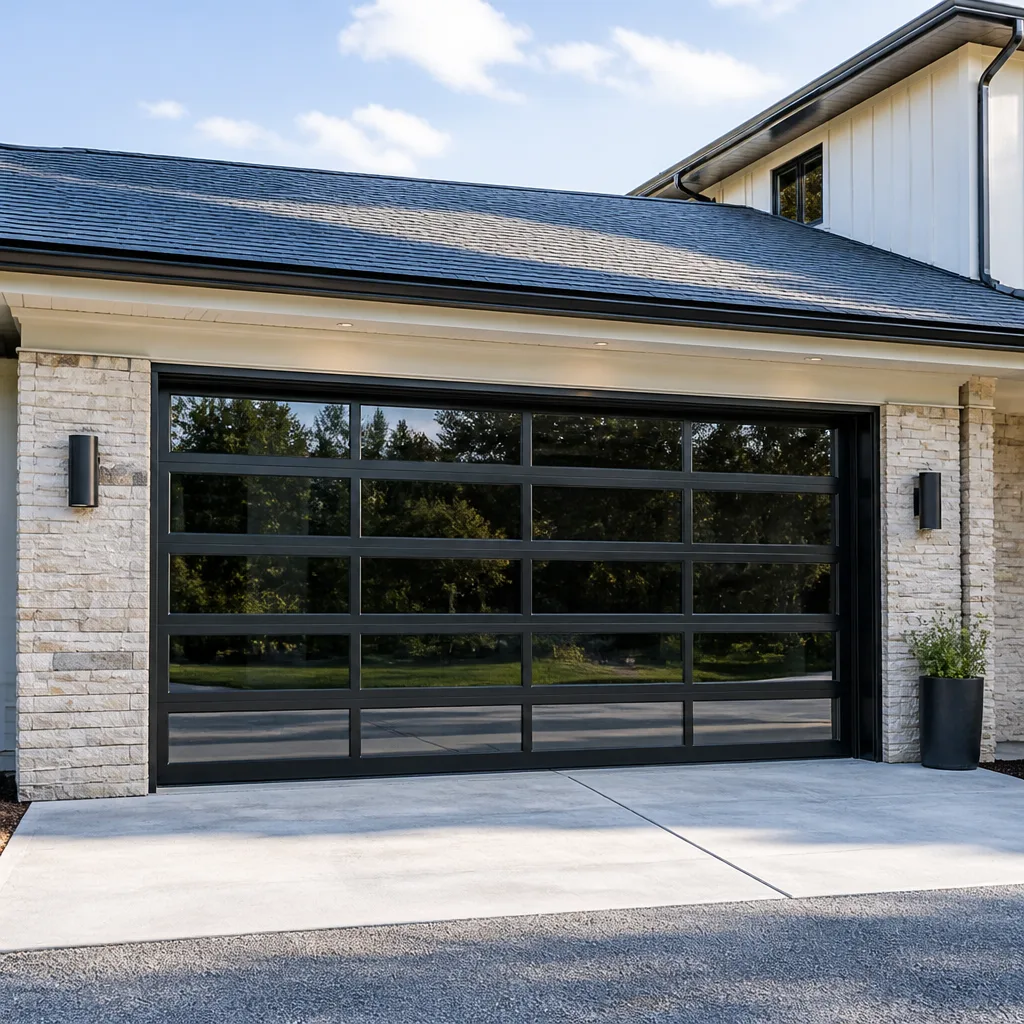 Full-view glass
 LiftMaster openers
 Chamberlain openers
Full 25-point door and opener safety check with every visit - springs, cables, rollers, tracks, and your LiftMaster or Chamberlain opener included
You get a price before we start. It does not change when the pro arrives.
Get your free estimateGarage Door Repair Troubleshooting in Midland: Common Problems and How to Fix Them
A garage door that reverses before it closes and a door that won’t move at all look like two different emergencies. They’re actually opposite problems with opposite fixes, and confusing them is the most common reason a DIY repair makes things worse. One is usually a sensor or travel-limit issue; the other often points to a spring, cable, or opener fault that no amount of button-pressing will solve. This guide maps the most common Midland garage door failures to the mechanical system responsible, so you can read your door’s symptoms like a diagnostic chart instead of a panic list. You’ll learn what’s safe to check yourself, what isn’t, and how to describe the failure clearly enough that the first technician visit is diagnostic and repair in one trip.
Quick Answer
Most garage door problems in Midland fall into six mechanical categories: safety sensor faults, opener logic or travel-limit errors, torsion spring failure, cable or drum failure, roller and track wear, and panel or balance damage. A door that reverses on the way down is almost always a sensor or limit problem, while a door that won’t lift at all usually has a spring, cable, or opener drive issue. Never adjust springs or cables yourself – those systems store dangerous tension and belong to a trained technician. Diagnose your symptom, then call (844) 904-1321 for a free estimate.
Styles & brands we work with
- Raised-panel steel
- Carriage house
- Modern flush
- Full-view glass
- LiftMaster openers
- Chamberlain openers
Table of Contents
- Symptom-to-System Map: Which Part Is Actually Failing?
- Why Midland’s Dust and Temperature Swings Cause Repeat Failures
- The 90-Second Safety Sensor Test You Can Do Before Calling
- What’s Safe to Investigate Yourself (and What Isn’t)
- Spring and Cable Failures: Why These Are Never DIY
- Opener Problems: From Smart Systems to Legacy Units
- Grinding, Squealing, and Track Wear
- How to Describe the Failure So the First Visit Fixes It
Symptom-to-System Map: Which Part Is Actually Failing?
Before you call anyone, the single most useful thing you can do is match the symptom to the system. A garage door is a mechanical assembly, and each failure pattern points to a specific component. Read your door the way a technician reads it.
- Door reverses immediately on the way down: safety sensor misalignment or obstruction; occasionally a travel-limit setting on the opener.
- Door won’t lift at all and the opener hums: torsion spring failure or a snapped cable – the opener is running but the door has lost its lift assist.
- Door lifts a foot then stops: travel-limit or force-setting error on the opener, or a binding roller in the track.
- Grinding or scraping during travel: worn rollers, a bent track section, or a dry hinge.
- Door hangs crooked or one side lags: cable or drum failure on one side – stop using the door.
- Opener clicks but nothing moves: logic board fault, dead capacitor, or a stripped drive gear.
Notice how distinct these are. A reversal is a sensor conversation. A dead hum is a spring conversation. The mistake homeowners make is treating every problem as an opener problem, then replacing a perfectly good opener only to find the door still won’t lift. In Midland, where doors run hard against dust and heat, we see this pattern often. Start with the symptom, not the part.
Reading the symptom correctly saves a service call
If you can tell us “the door reverses six inches off the floor and the opener light blinks,” that’s a completely different diagnostic path than “the door won’t move.” Both are garage door repair problems, but one is a sensor realignment and the other is a mechanical failure. Getting the category right up front is the whole point of troubleshooting.
Why Midland’s Dust and Temperature Swings Cause Repeat Failures
Midland’s climate works on garage doors in ways a generic troubleshooting guide never mentions. The region gets caliche dust – fine, alkaline, mineral-heavy soil particles that get kicked up by wind and traffic and settle into every moving part. Combine that with wide day-to-night temperature swings, and you get a specific wear pattern.
How caliche dust accelerates wear
That dust doesn’t just look bad on the door. It migrates into rollers, hinges, and the track channel, where it acts like a mild abrasive. Rollers that would normally last years start to squeal and bind faster. Hinges dry out and stiffen. The bottom seal loses its flex. None of this is dangerous on its own, but it stacks up – a binding roller forces the opener to work harder, which stresses the drive gear, which leads to opener failure. What starts as a dust problem becomes an electrical one.
How temperature swings stress springs and seals
Torsion springs are under constant load, and repeated thermal cycling – warm days, cool nights – adds cycle stress on top of the normal open-and-close wear. Springs are rated by cycles, not years, so a door that runs several times a day in a busy Midland household will work through its spring life on schedule. The rubber bottom seal and weatherstripping also dry and crack faster here. The practical takeaway: doors in Midland need more frequent roller and hinge attention than the maintenance schedule in a national homeowner manual suggests.
The 90-Second Safety Sensor Test You Can Do Before Calling
The safety sensors are the two small eyes mounted near the floor on each side of the door opening. When they lose alignment or get blocked, the door reverses – and this accounts for a large share of “my door won’t close” calls. Here’s a test you can run in under two minutes.
- Look at both sensors. Each should have a small indicator light. If one is dark, it’s lost power or connection; if it’s blinking, it’s misaligned or obstructed.
- Wipe the lenses. Midland dust coats these lenses fast. A dry cloth on both eyes clears the most common false obstruction.
- Check for obstruction. Look for a broom, a bin, a garden hose, or a pet toy in the beam path.
- Test alignment. With the door open, wave a hand slowly through the beam. If the indicator reacts, the sensors are communicating.
- Try the door. If it now closes fully, you’ve solved it. If it still reverses, the alignment or wiring needs a technician’s eye.
If the sensors pass this test and the door still reverses, the problem has moved into the opener’s travel limits or the door’s balance. That’s a different diagnosis, and it’s where a specialist’s diagnostic visit earns its keep.
What’s Safe to Investigate Yourself (and What Isn’t)
Not every symptom is a hands-off situation. Some checks are genuinely safe for a homeowner; others cross a line into dangerous territory. Knowing where that line sits is the most important skill in troubleshooting.
Safe to check yourself
- Sensor lights, lens cleanliness, and beam obstruction (the test above).
- Whether the opener has power – check the wall outlet and the breaker.
- Visual inspection of rollers and hinges for obvious cracks or missing parts (with the door fully closed and the opener disconnected).
- Whether the manual release cord works properly and the door disengages cleanly.
- Listening for where a noise comes from – track, hinges, or opener head.
Stop and call – do not touch
- Torsion springs. These are the horizontal coil springs above the door. They store enormous energy. Never adjust, lubricate the winding, or attempt to wind or unwind one.
- Cables and drums. A cable under tension can snap violently. If you see a slack or broken cable, keep everyone clear of the door.
- A door that’s hanging crooked or won’t stay down. Balance failures mean the tension system has failed. Using the door can cause it to drop.
- Extension springs above the door – on older doors, these are equally dangerous.
The line is simple: anything that stores or adjusts tension is off-limits. Everything that involves a sensor, a switch, or a visual check is fair game. When in doubt, treat it as dangerous and call.
Spring and Cable Failures: Why These Are Never DIY
Spring and cable failures are the number one reason a garage door goes from “annoying” to “completely dead.” They’re also the reason a technician’s diagnostic visit is worth making. Here’s what’s actually happening when these fail, without any instructions you should try at home.
A torsion spring is a coiled steel spring that counterbalances the door’s weight. It’s wound to a specific tension so the door feels light – you can lift it with one hand. When the spring fatigues or breaks, that counterbalance disappears and the full weight of the door is suddenly on the opener and cables. The opener isn’t built to lift a door without spring assist, so it either stalls, strains, or burns out. That’s the “hum but no lift” symptom.
Cables run from the bottom corners of the door up to drums on the torsion shaft. They keep the door level and connect it to the spring system. A cable can fray, jump its drum, or snap – and when it does, the door hangs crooked or drops on one side.
What a technician actually does
- Secures the door so it can’t move, then identifies the failed component.
- Releases spring tension in a controlled way using proper winding bars.
- Replaces the spring (or matched pair) or cable and drum as needed.
- Re-tensions, balances, and tests the door through full cycles.
- Checks the opener isn’t damaged from running against a failed spring.
Springs are usually replaced in matched pairs, because if one has failed the other is close behind it. Ask for the pair quote up front. A trained technician handles this in a single visit – and it’s the one repair you should never attempt because a spring under tension can cause serious injury. Our technicians have up to 9 years of experience with exactly this kind of work.
Opener Problems: From Smart Systems to Legacy Units
Openers fail in a narrower set of ways than doors do, but the brand matters. Modern smart-home-integrated units like LiftMaster, Chamberlain, and Genie use logic boards, capacitors, and smartphone connectivity, while legacy units like Craftsman often fail on mechanical wear – stripped gears, worn capacitors – rather than electronics. Knowing your opener’s era changes the diagnosis.
Common opener symptoms and what they mean
- One remote doesn’t work, others do: remote battery or programming, not the opener.
- Wall button works but remotes don’t: receiver or antenna issue on the opener.
- Door closes partway and reopens: travel limit or force setting needs adjustment.
- Opener runs and light flickers but door sticks: drive gear or coupler wear.
- No response at all: power, capacitor, or logic board.
Here’s where a dedicated specialist beats a general handyman: brand fluency means we work with your existing system rather than steering you toward a replacement. If your opener is a Genie with a tired capacitor, that’s a repair, not a new install. If it’s a Clopay door mated to a Chamberlain opener with a failed logic board, we can tell you whether repair makes sense before quoting a replacement. That’s the advantage of a company that focuses only on garage doors and openers – every tool and every diagnostic is concentrated on this one system. The same principle drives our garage door opener repair work.
Grinding, Squealing, and Track Wear
Noise is information. A garage door should move with a low, even sound. Grinding, squealing, or scraping tells you exactly where the friction is – if you know how to listen.
Decode the noise
- Squealing or high-pitched whine: dry hinges or rollers. Usually the easiest fix.
- Grinding that gets worse: a worn roller that’s no longer round, or a track that’s bent.
- Scraping at the top or bottom of travel: the track is off-alignment or the door is rubbing the frame.
- Rattling during travel: loose hinges, a loose panel, or a worn bearing plate.
In Midland, dust is often the root cause. It dries out roller bearings and settles into the track, and before long a smooth door sounds like it’s fighting itself. A technician can replace worn rollers and hinges and realign a bent track section in a single visit. Left alone, a binding roller strains the opener and turns a small fix into a larger one. For most Midland doors, roller and hinge attention every few seasons is the difference between quiet operation and a chronic noise complaint. If the noise has escalated, our garage door repair service covers the full range of panel, track, and hardware issues.
How to Describe the Failure So the First Visit Fixes It
The most underrated troubleshooting skill is description. A technician on the phone can often route the right parts and the right approach if the homeowner describes the failure precisely. That’s the difference between a diagnostic visit and a diagnostic-plus-repair visit.
What to have ready before you call
- The symptom, in order. “It opens fine but stops six inches from closing and reverses” tells us more than “it’s broken.”
- Whether the opener makes sound. Humming means the motor runs but the door can’t move. Silence means power or control.
- The door’s condition. Does it hang level? Is one side lower?
- The opener brand and door brand, if you know them. Genie, LiftMaster, Chamberlain, Craftman, and others each have their own parts and diagnostic quirks.
- What you’ve already checked. “I cleaned the sensors and the light is still blinking” saves time.
- Any recent changes. New remote, power blip, storm, or a door that’s been noisy for weeks.
When you give us that picture, we can arrive with the right rollers, springs, or opener parts and treat the first visit as diagnostic and repair in one. That’s the whole reason we put a troubleshooting guide like this together – a homeowner who can describe the symptom accurately gets a faster, cleaner repair, and in Midland that matters when the door is your daily way in and out.
Common Mistakes to Avoid
- Replacing the opener before checking the door. If the door won’t lift, the opener is often the victim, not the cause. A failed spring will kill three openers in a row if you let it.
- Ignoring the sensor lights. A blinking sensor light is the fastest diagnostic in the whole system. Many Midland calls are solved in ninety seconds by cleaning the lenses.
- Skipping lubrication because of the dust. It’s tempting to think lubricant will just collect caliche dust. In practice, the right lubricant on hinges and rollers keeps them from binding and wearing out faster. Ask what type to use and where.
- Forcing a crooked door. A door hanging on one side means a cable or drum has failed. Running it “one more time” risks the door coming down.
- Letting a small noise become a big repair. A squealing roller is cheap to replace. The opener it wears out is not.
- Treating a garage door like a handyman job. A general handyman may not have the winding bars, the spring stock, or the diagnostic know-how for a modern opener. This is a precision mechanical system, not a door that needs a hinge tightened.
- Not asking whether springs are replaced as a pair. Matched springs age together. Replacing one and leaving the other invites a second failure within months.
See the difference
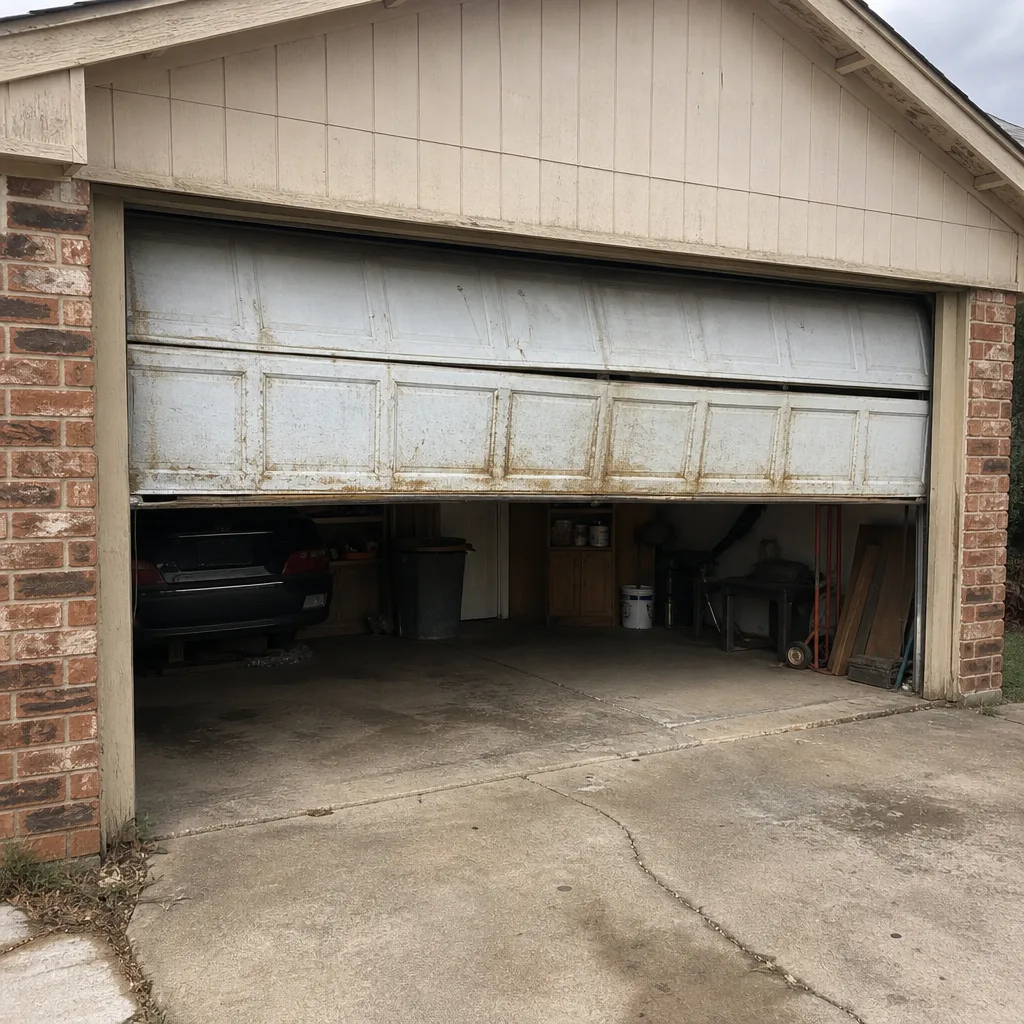 Before
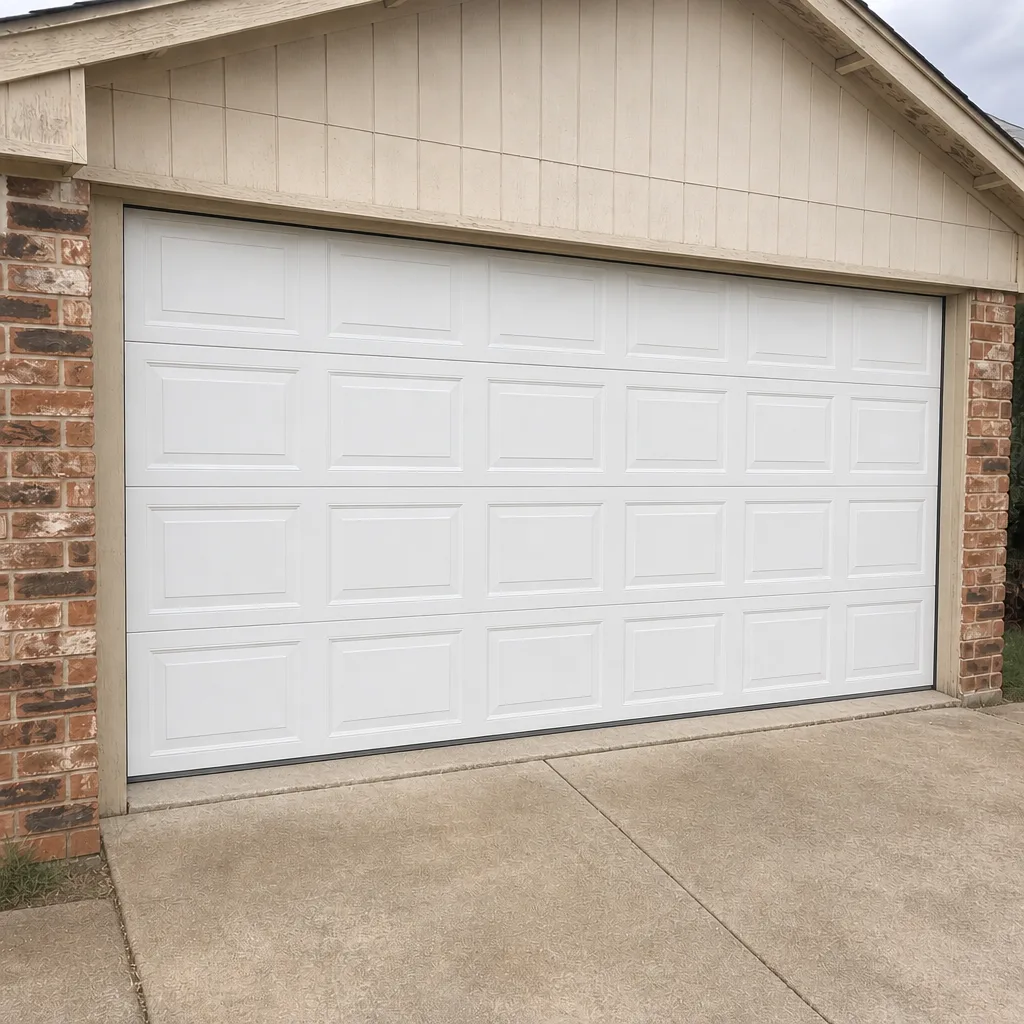 After
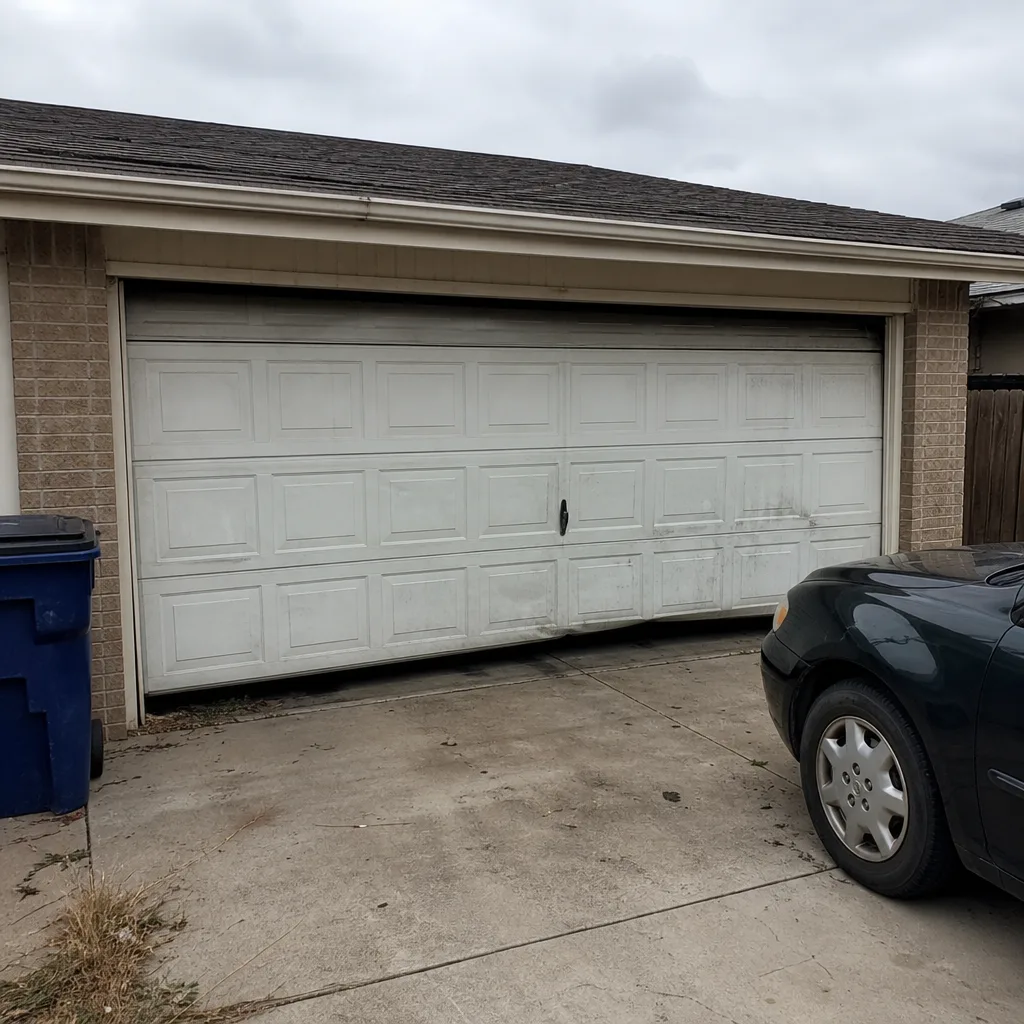 Before
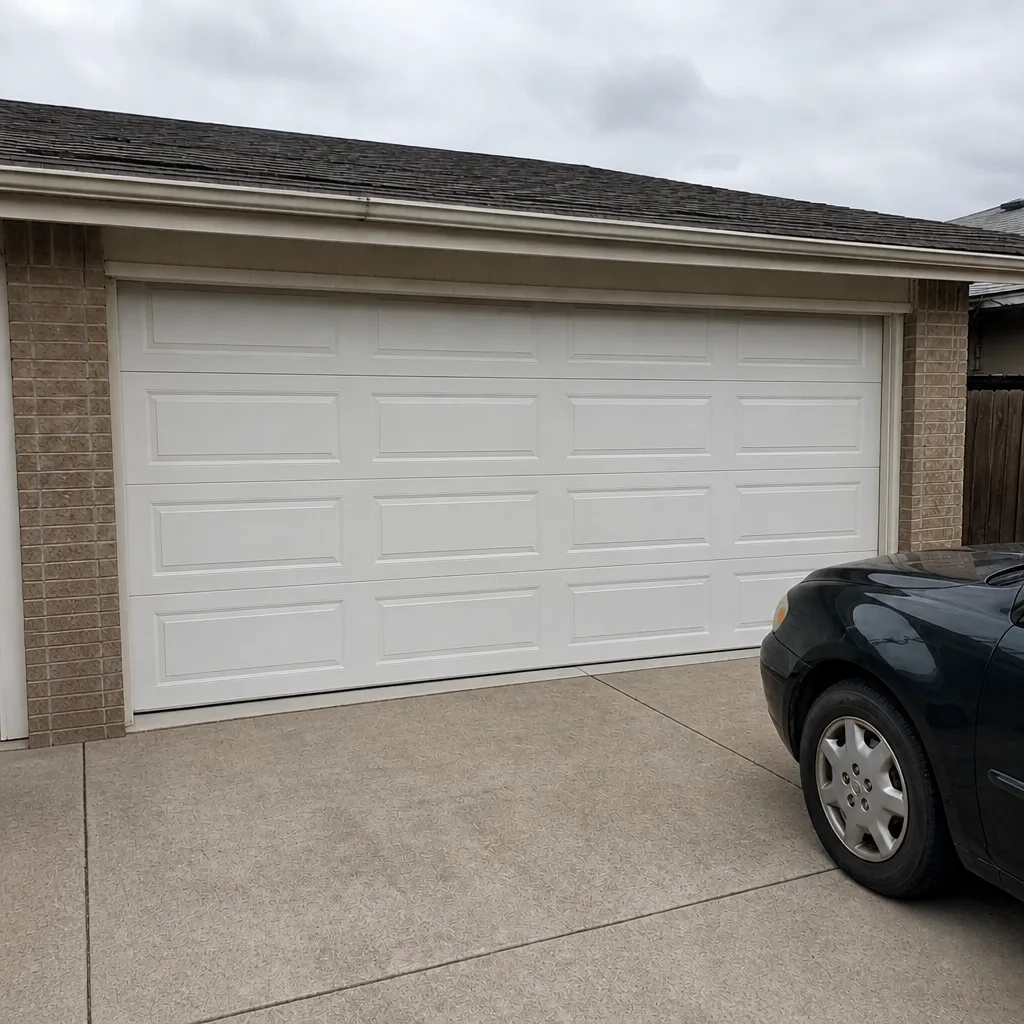 After
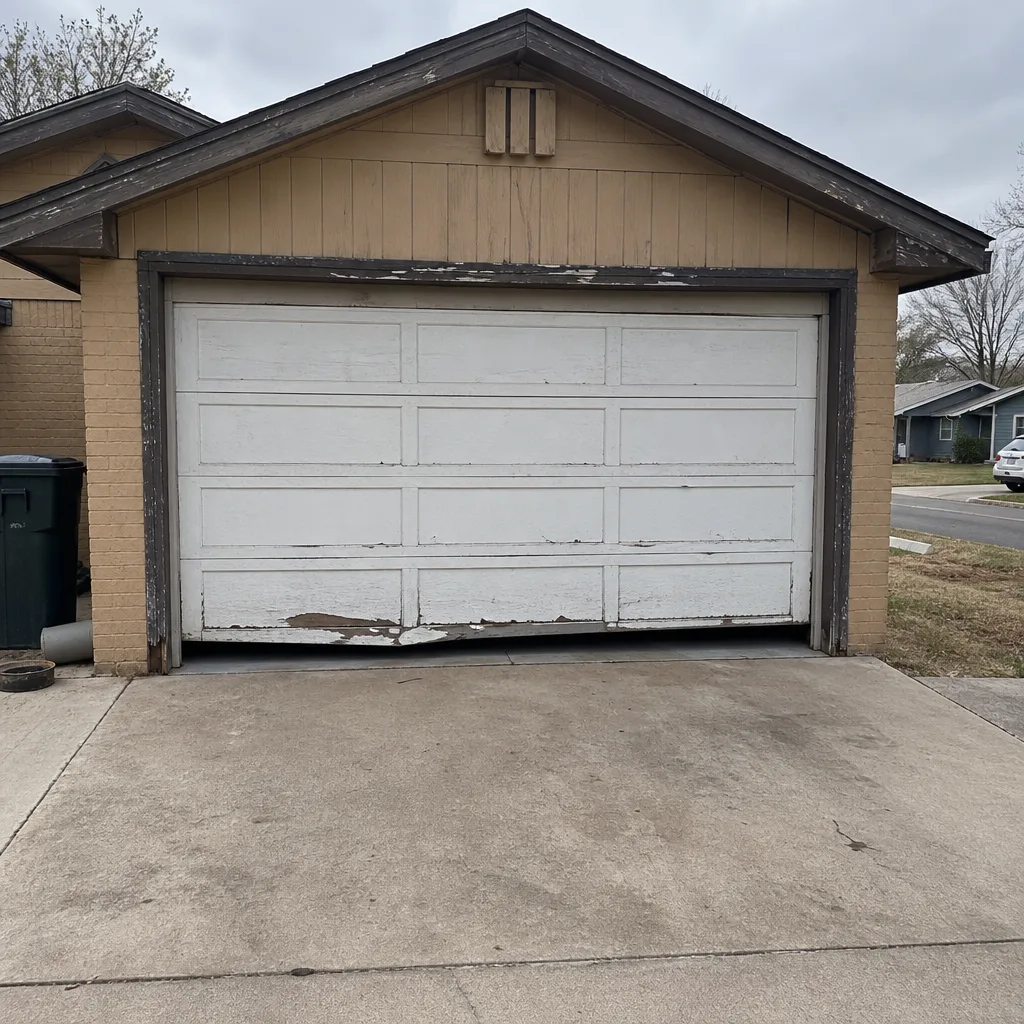 Before
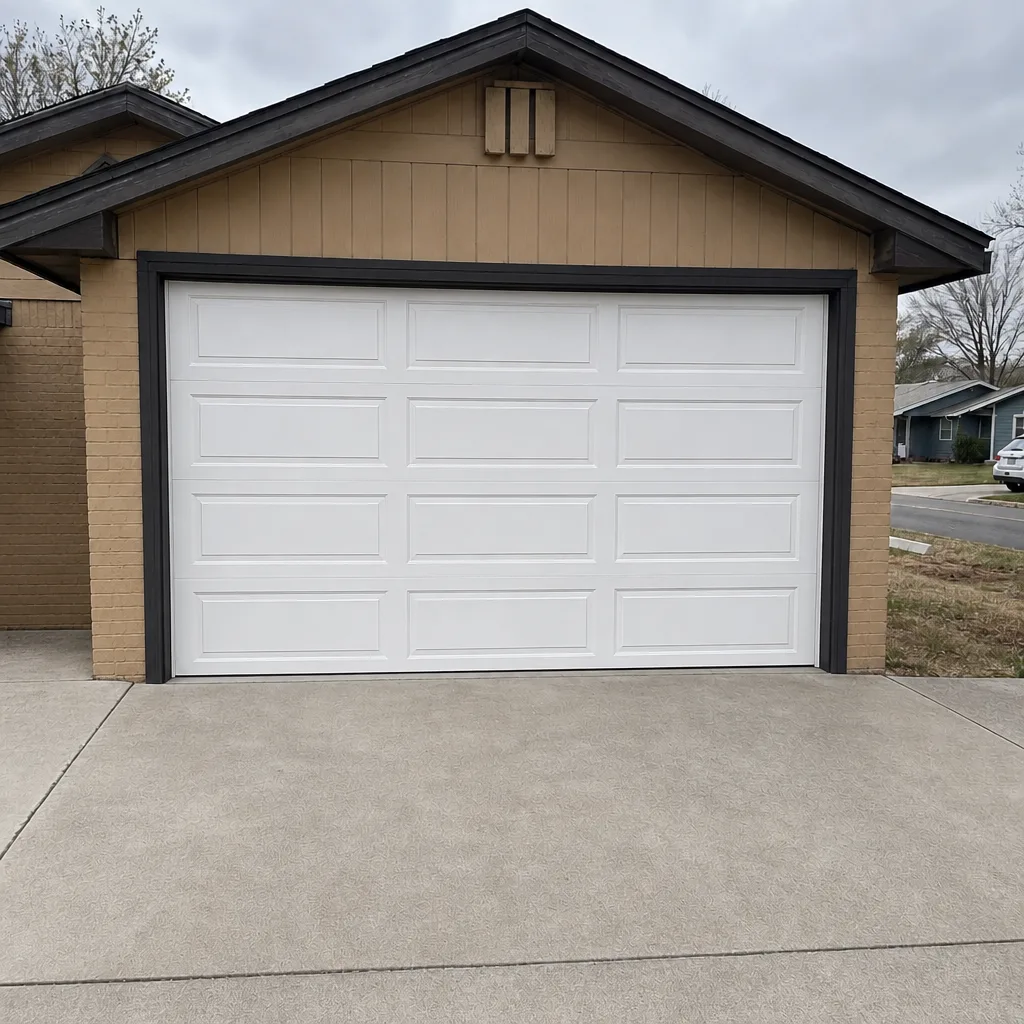 After
When to Call a Professional
Call a professional the moment your symptoms cross into tension, balance, or electrical territory. If the door won’t lift at all, hangs crooked, has a visible broken spring or slack cable, or reverses even after a clean sensor test, stop using the door and call. Those are the scenarios where a DIY attempt is most likely to turn a repair into an injury. The same goes for any opener that’s silent when you press the button – chasing a logic board or capacitor without the right meter is guesswork. Nautilus Garage Door Repair offers free estimates in Midland. We specialize in the full range of garage door and opener brands – from a single spring to a full installation – and we work with your existing system rather than pushing a replacement. Call (844) 904-1321. We answer 24/7. Fast dispatch from 7am to 7pm, Sunday through Friday.
Frequently Asked Questions
Garage door repair in Midland is priced per job and set by a written estimate, so the number depends on the failed component – a sensor realignment, a roller and hinge replacement, and a matched spring pair are very different scopes. The estimate is free and the written price is the price before any work starts. Call (844) 904-1321 for a free estimate.
We can often schedule same-day service for repair calls. We answer 24/7, and fast dispatch runs 7am to 7pm, Sunday through Friday. A call outside dispatch hours is booked into the next opening. Call (844) 904-1321 to check availability for your garage door repair.
A humming opener with a door that won’t move usually means the torsion spring or a cable has failed, so the motor runs but the door has lost its lift assist. Stop using the door; running it further can damage the opener. This is a technician job because springs and cables store dangerous tension. Call (844) 904-1321 for a free estimate.
A door that reverses before closing is almost always a safety sensor problem – misalignment, a dirty lens, or an obstruction in the beam. In Midland, caliche dust coating the lenses is a frequent culprit. Run the 90-second sensor test, and if the door still reverses, call (844) 904-1321 for a diagnostic visit.
We work on eight major brands – LiftMaster, Chamberlain, Genie, Clopay, Amarr, Wayne Dalton, Craftsman, and Raynor – covering current smart-home systems and legacy openers alike. That brand fluency means we work with your existing system instead of steering you to a replacement. Call (844) 904-1321 to confirm your setup.
No – the written estimate sets the price before any work starts. If a technician finds an additional failed component during the repair, you’ll get the change approved in writing before it’s done. Free estimates in Midland; call (844) 904-1321 to get started.
The Bottom Line
Garage door troubleshooting works best when you match the symptom to the system. A door that reverses is usually a sensor or limit issue. A door that won’t move is usually a spring, cable, or opener drive problem. Grinding and squealing point to rollers, hinges, and track. In Midland, caliche dust and temperature swings push rollers and seals harder than a generic maintenance schedule expects, so keep an eye on noise and clean those sensor lenses often. Check what’s safe – sensors, power, visual inspection – and stop at anything that stores tension. Then describe the failure clearly so the first visit fixes it. When you’re ready, we’re here: Nautilus Garage Door Repair covers repair, opener repair, and full installation across Midland and the surrounding area, from a single spring to a full installation. Call (844) 904-1321 for a free estimate.
Written by the team at Nautilus Garage Door Repair.