
Last updated November 14, 2026
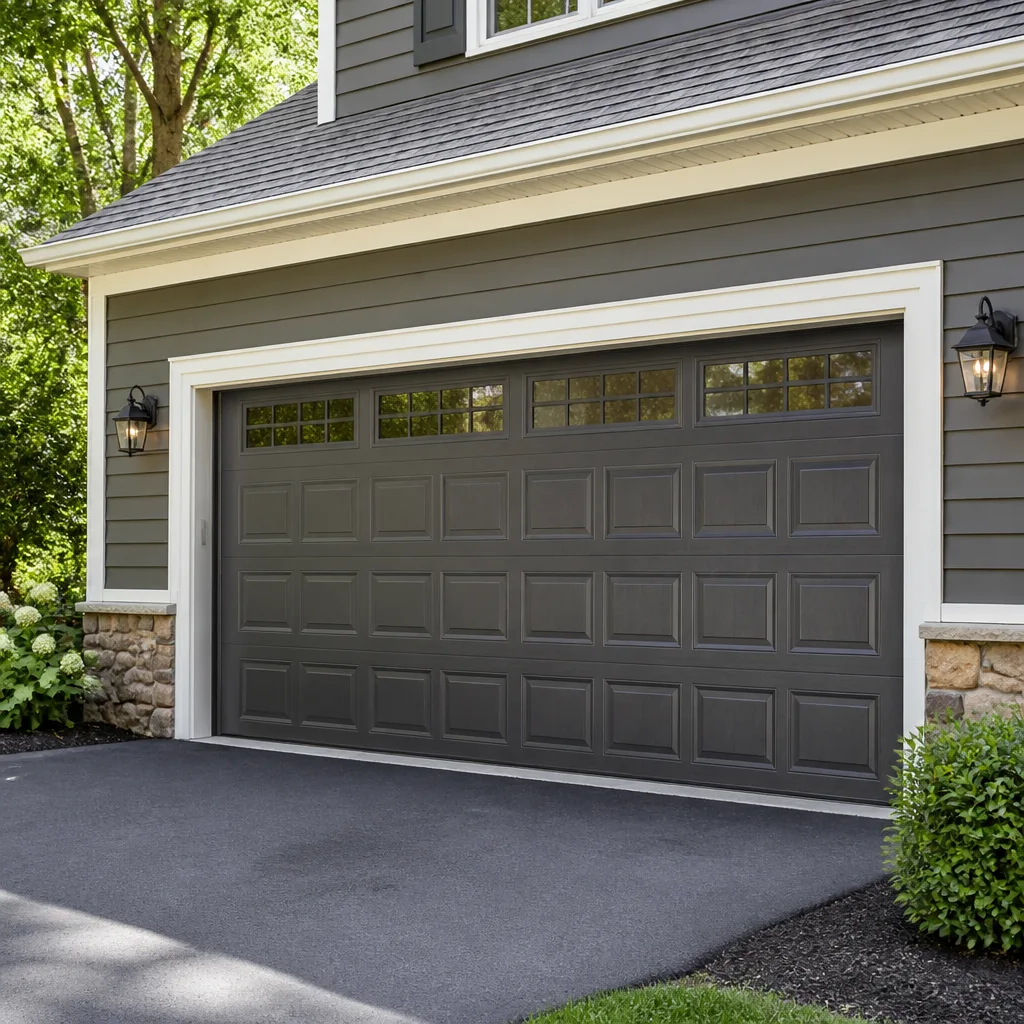 Raised-panel steel
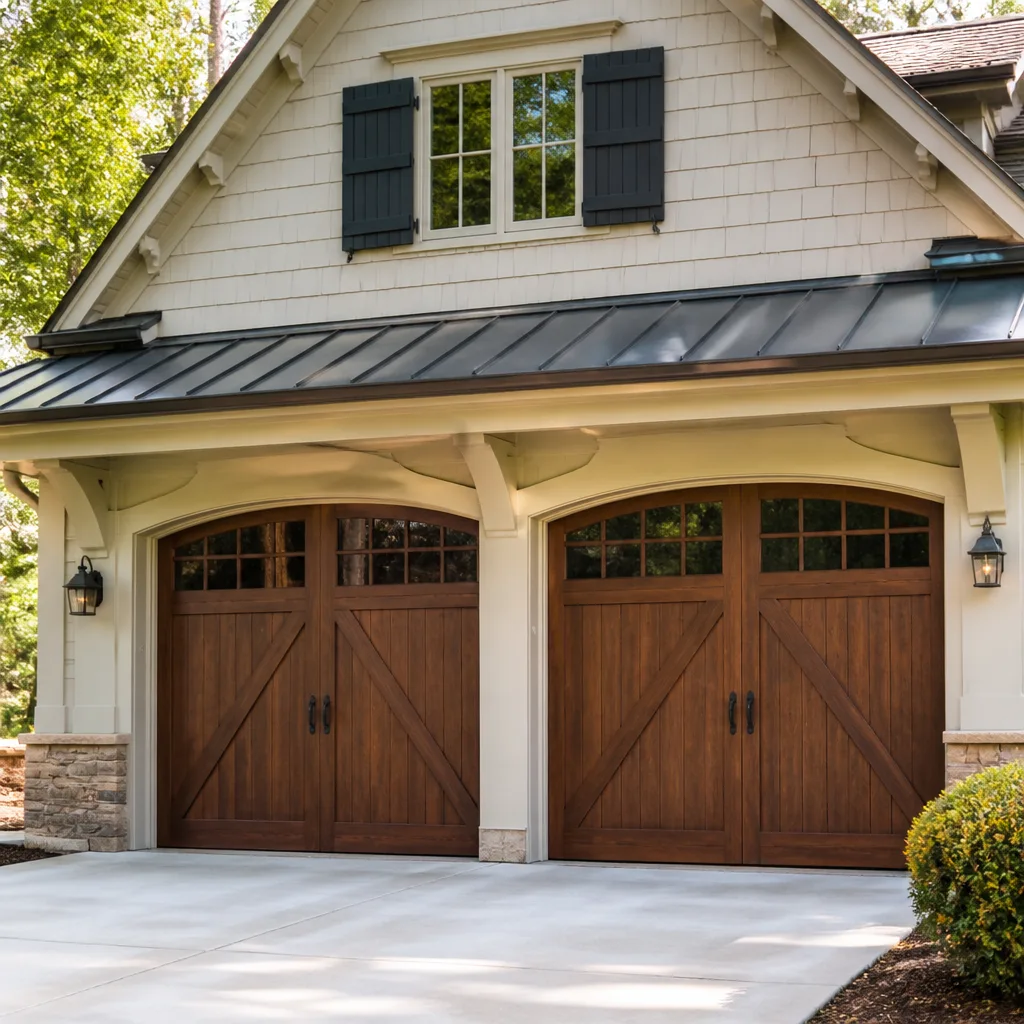 Carriage house
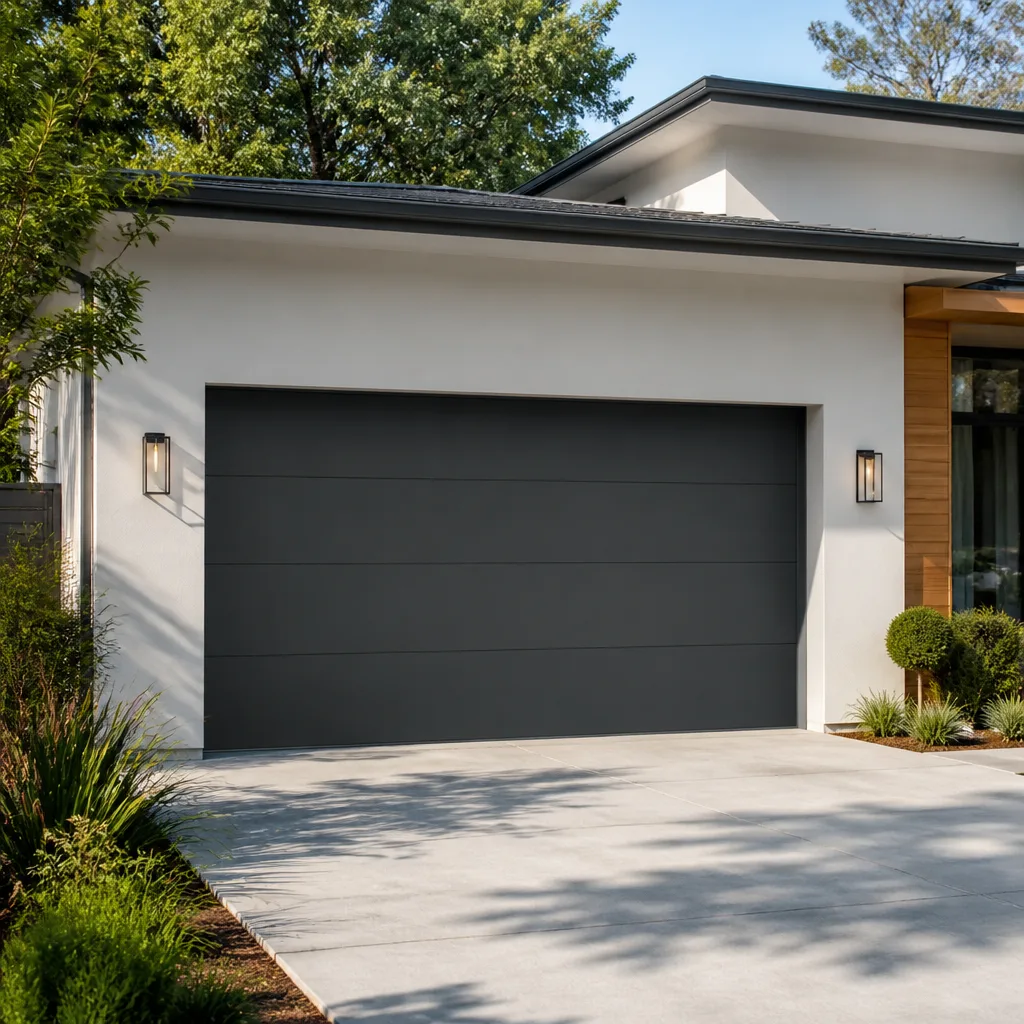 Modern flush
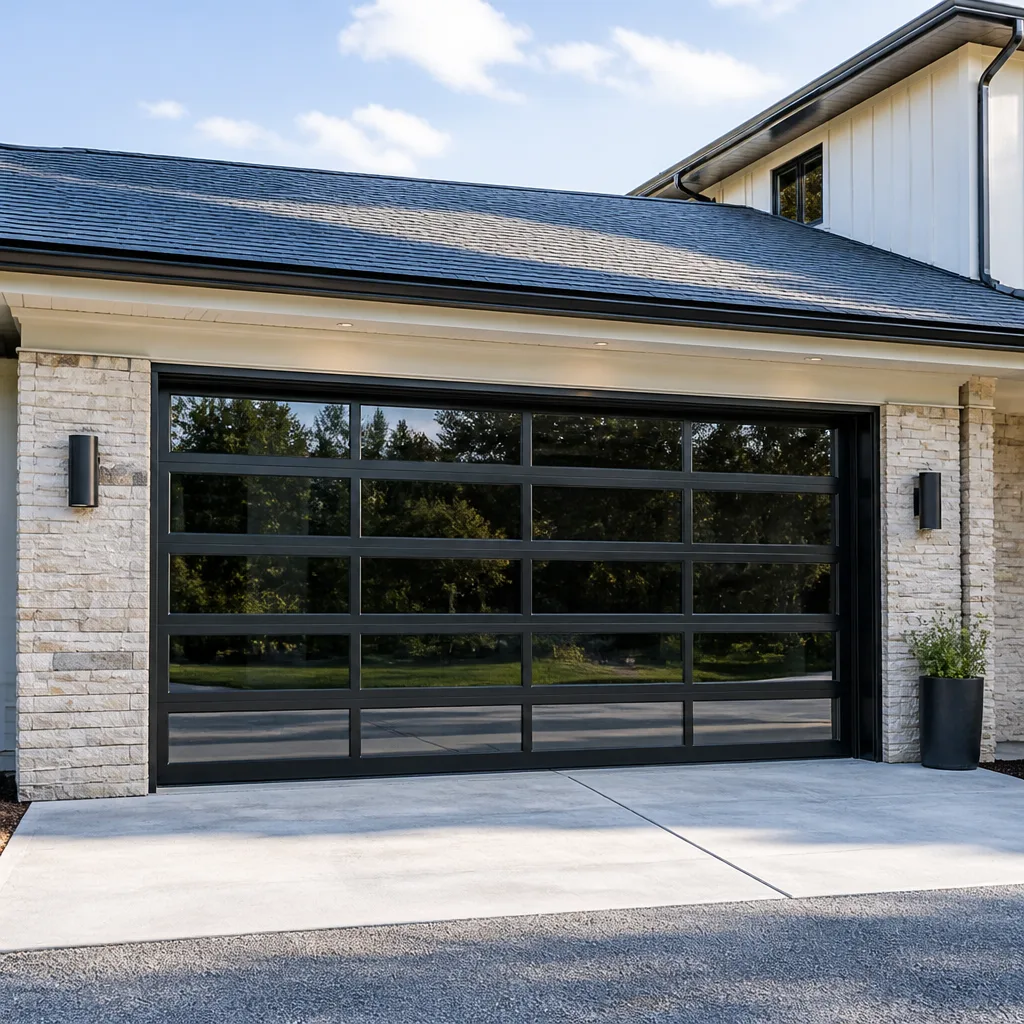 Full-view glass
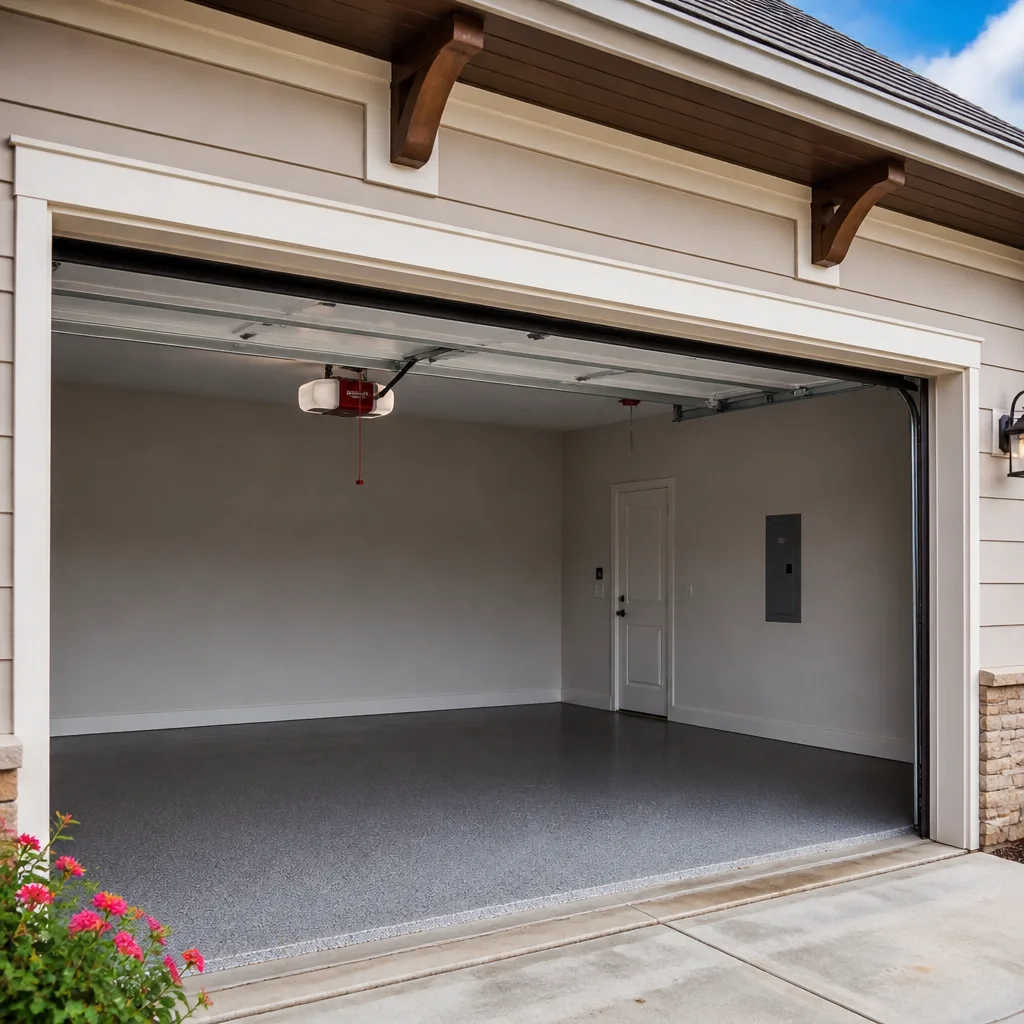 LiftMaster openers
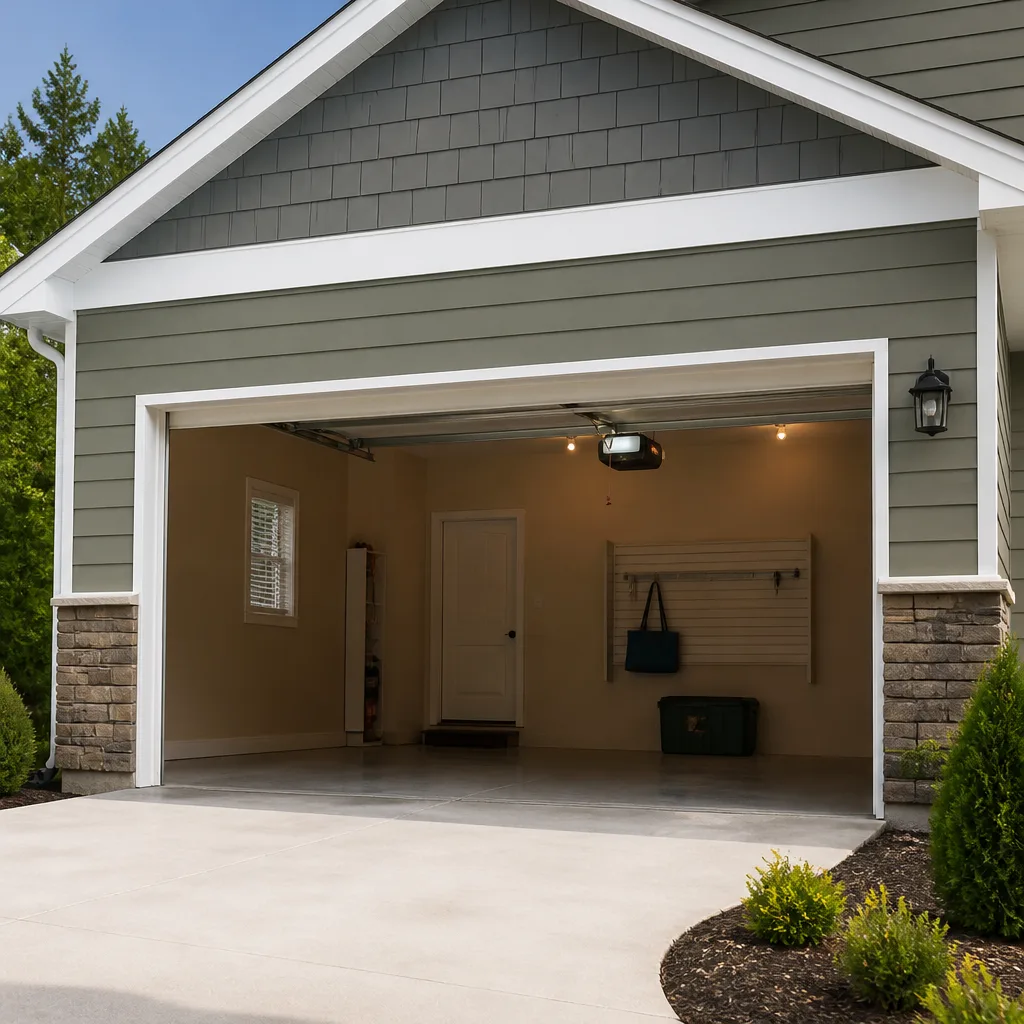 Chamberlain openers
Full 25-point door and opener safety check with every visit - springs, cables, rollers, tracks, and your LiftMaster or Chamberlain opener included
You get a price before we start. It does not change when the pro arrives.
Get your free estimateGarage Door Repair Maintenance Checklist for Midland Homeowners
Most garage door maintenance checklists floating around online were written for climates with snow, salt air, and months of rain. Copy one here and you’ll spend your time on the wrong parts. In Midland, the failure that quietly ends a door’s life isn’t rust or frost. It’s grit. Blowing soil and caliche dust settle onto rollers, hinges, and tracks, and once that fine abrasive works into a bearing, no amount of tightening stops the grinding. The task most homeowners skip, purging and re-lubricating the moving parts after a dust storm, is the single job that would prevent most premature bearing failures we see. This guide walks you through what to clean, when to lubricate, and how to read the warning signs before a small problem becomes a broken spring.
Quick Answer
A garage door in Midland stays reliable when you clean and re-lubricate the rollers, hinges, and tracks after each significant dust event, check torsion spring tension as temperatures swing seasonally, inspect the bottom seal for embedded grit, and watch for opener thermal shutdowns on hot summer days. Aim to lubricate more often than the standard yearly cycle because Midland heat thins grease fast, and re-tension or replace springs before they fail rather than after.
Styles & brands we work with
- Raised-panel steel
- Carriage house
- Modern flush
- Full-view glass
- LiftMaster openers
- Chamberlain openers
Table of Contents
- Post-Dust-Storm Protocol for Midland Doors
- How Often Should You Lubricate a Garage Door in the Midland Heat?
- When to Check Torsion Spring Tension
- Bottom Seal Inspection in Blowing Soil
- Why Your Opener Keeps Shutting Off on Hot Days
- Tracks, Rollers, and Hardware: What to Look For
- A Seasonal Maintenance Calendar for Midland
- When to Call a Professional
Post-Dust-Storm Protocol for Midland Doors
When the wind kicks up dust in Midland, that airborne grit doesn’t just coat your driveway. It lands on every upward-facing surface of your garage door, and the moment you open the door, it gets pulled into the tracks, pressed into roller bearings, and caught inside hinge pivots. Left in place, those particles become an abrasive paste the next time a lubricant mixes with them. That’s the mechanism behind most of the bearing failures we diagnose in this market.
After a significant dust event, walk the door and address these areas before you operate it more than necessary:
- Wipe the tracks. Use a dry cloth or a stiff brush to clear loose grit from the vertical and horizontal tracks. Don’t wash them out with a hose; wet dust turns into a muddy film that hardens.
- Blow out the hinge pivots. A quick blast of compressed air (or a can of it) clears trapped grit from the joint before it grinds.
- Check roller stems. Look at where each roller meets the hinge. If you see packed dust around the stem, clean it before lubricating.
- Inspect the bottom seal. Grit trapped under the seal gets ground into the threshold every time the door closes. Wipe the seal edge and the concrete beneath it.
- Re-lubricate only after cleaning. Adding lubricant to a dirty surface seals the abrasive in. Clean first, then apply.
- Test the door by hand. Disconnect the opener and lift the door halfway. It should move smoothly. Grinding or a gritty scrape means grit is still where it shouldn’t be.
This protocol matters because a garage door is a precision mechanical system, not a static panel. Every roller, hinge, and bearing is meant to move freely. When Midland dust interrupts that, the whole system strains. If cleaning doesn’t restore smooth operation, the rollers may already be worn enough to replace. Our garage door repair technicians see this constantly after a windy stretch, and a clean, correctly lubricated door is the cheapest repair there is.
How Often Should You Lubricate a Garage Door in the Midland Heat?
In most climates, garage door manufacturers recommend lubricating moving parts once a year. In Midland, that interval is too long. Sustained summer temperatures above 95°F thin and migrate standard grease, meaning it slides off high-load points like roller bearings and hinge pivots before it has done its job. When the lubricant migrates away, bare metal contacts bare metal, and wear accelerates.
Here’s how we’d adjust the routine for Midland:
- Standard cycle: Re-lubricate rollers, hinges, springs, and the opener rail roughly every six months. In practice, many homeowners here find their grease has thinned noticeably by that point during a hot summer.
- After heavy dust: If a dust storm has passed since your last lube, clean and re-apply sooner. Dust absorbs grease and turns it into a grinding compound.
- Before a seasonal change: Do a full lubrication pass when temperatures start to swing, so the moving parts are protected through the transition.
What you use matters as much as when. A lithium-based or garage-door-specific spray lubricant holds up better in heat than a light oil that evaporates or runs. Avoid heavy grease on the tracks themselves; tracks should be clean and dry, not slick. Reserve lubricant for the bearings, hinges, and springs.
What to Lubricate (and What to Leave Alone)
Not every surface wants grease. Get this wrong and you’ll attract more dust than you repel. Lubricate roller bearings, hinge pivots, torsion spring coils, and the opener’s rail or chain as directed by the manufacturer. Leave the vertical tracks dry. If your door uses rollers with sealed bearings, a light spray on the stem is enough. Belt-driven openers, common on newer LiftMaster and Chamberlain units, generally need no rail lubricant at all.
When to Check Torsion Spring Tension
Torsion springs are the most dangerous component on a garage door, and in Midland their behavior is tied to temperature swings rather than the calendar. Springs lift and hold the weight of the door, and their tension changes with temperature. When the hanger cools after a hot day, the metal contracts slightly and the tension shifts. Over a season of swings, that cycling stresses the spring and can reveal a weakening before it snaps.
You may already know the warning sign. A door that closes slightly harder in the cool of a winter morning, or that won’t stay fully up when lifted by hand, is telling you tension has drifted. This is the point to schedule a check, not the point to intervene yourself.
Safety caution: Torsion springs are stored energy at its most concentrated. Never attempt to adjust, wind, or remove a torsion spring yourself. A spring under tension can release suddenly and cause serious injury. This is work for a trained technician with the right tooling. We’re including this section so you can recognize the symptom and know who to call, not so you’ll attempt the repair.
Have a technician check spring tension as temperatures drop, not just once a year on a fixed date. That timing matches how the hardware actually behaves here. If your door is fitted with torsion springs from a brand like Amarr or Raynor, the technician will match replacement springs to the door’s original weight rating rather than guess.
Bottom Seal Inspection in Blowing Soil
The bottom seal is the rubber or vinyl strip along the lowest edge of your door, and in most maintenance guides it’s treated as a weatherstripping item that fails from sun exposure. Midland changes the equation. Blowing soil and caliche grit attack the seal from below, grinding fine abrasive particles into the rubber every time the door closes on a dusty threshold. That grit does two things: it wears the seal faster, and it packs against the floor, letting more dust into the garage on the next cycle.
When you inspect the seal, look for:
- Embedded grit: Sand or fine soil pressed into the seal’s edge. Wipe it away so it doesn’t keep grinding.
- Cracks and splits: Especially along the contact edge where the door meets concrete.
- Compression set: A seal that has flattened and no longer seals against the floor.
- Loose or torn ends: Gaps at the corners let wind-driven dust pour through.
A seal that’s past its life can be replaced on its own, without touching the door panels. Ask for the bottom seal to be matched to your door’s model so the fit is correct; a generic strip on a Wayne Dalton or Craftsman door may not seat the same way as the factory part. Keep the seal clean and the gap tight, and you’ll cut down on how much grit makes it onto the rollers and hinges in the first place.
Why Your Opener Keeps Shutting Off on Hot Days
If your opener stops mid-cycle or refuses to respond on a hot afternoon, then works again the next morning, you’re probably seeing the motor’s thermal cutoff, not a dead unit. Garage door openers are built with a thermal protector that trips the motor when it overheats. On a Midland summer day, with the garage itself holding heat and the motor working against a door with stiff, dry rollers, repeated trips push the motor toward that shutdown.
Here’s how to tell thermal cutoff from a failing motor:
- Timing: If the opener fails consistently on hot afternoons but works in the morning or after the garage cools, heat is the trigger.
- Repeated trips: Frequent open/close cycles in quick succession build heat. If the opener quits after several trips rather than the first, that’s thermal behavior.
- Resetting: The opener often resumes after it cools. A failing motor usually doesn’t recover so cleanly.
- Door resistance: If the door itself is stiff, the opener overworks. Disconnect the opener, lift the door by hand, and feel for binding. A stiff door is a mechanical problem, not an opener problem.
- Wiring and remote: If remotes or the wall control also stop responding, rule out a power or logic-board issue with a technician.
The fix for thermal shutdowns is usually addressing what’s making the motor work too hard: cleaning and lubricating the door, checking for worn rollers, and confirming the opener’s force settings are correct. That’s why garage door opener repair starts with the door, not the motor. If your unit is a current smart-home-integrated LiftMaster, Chamberlain, or Genie, or an older Craftsman, our technicians work with the existing system rather than steering you toward a replacement opener by default.
Tracks, Rollers, and Hardware: What to Look For
Tracks and rollers are where Midland dust does the most visible damage. Tracks need to be straight, clean, and clear of grit. They don’t need to be shiny or heavily greased, and in fact grease on the tracks attracts dust. In our experience, the doors that last longest here are the ones whose owners keep the tracks dry and wipe them clean after dust events.
Rollers are the wear item. Each roller is a wheel riding in the track, and the bearing in the middle is where grit will destroy it. When you inspect rollers:
- Look for flat spots: A roller that skips or thumps as the door moves has likely worn flat. Replace it.
- Check for wobble: A roller that moves loosely in its hinge stem has a worn bearing.
- Listen: A grinding or squealing sound as the door travels points to a dry or failed bearing.
- Count the sets: Rollers are replaced in matched sets, so plan to replace a set if one is worn.
Also check the hinges where panels join. Hinge pivots collect grit and dry out. A quick clean and re-lube keeps them moving. If a hinge is bent or a panel is out of line, that’s a sign the door is operating under strain and should be looked at. Newer doors from Clopay and Amarr use hardware that’s easy to inspect, and the same rules apply.
A Seasonal Maintenance Calendar for Midland
A fixed calendar helps you stay ahead of the Midland climate instead of reacting after something breaks. Here’s how we’d structure a year of garage door maintenance here, matching tasks to how the temperature and dust actually behave.
- Spring (warming season): Do a full clean and lubrication pass. Inspect the bottom seal after the windy stretch and wipe out any packed grit. Check rollers for flat spots and hinges for drying.
- Early summer: Before peak heat, confirm the opener’s force settings are correct and the door moves freely by hand. A stiff door plus a hot motor is the recipe for thermal shutdowns.
- Mid-summer: Watch for opener shutdowns on hot days and address any stiff operation right away. Re-check that grease hasn’t thinned out. If the door starts to sound gritty, clean and re-lubricate.
- Fall (cooling season): Have a technician check torsion spring tension as temperatures swing, before the cool mornings arrive. This is the time to catch a weakening spring.
- Before winter (cool mornings): Re-lubricate and test the door’s balance by hand. Clean the tracks one more time and confirm the seal is still tight against the floor.
- Any time: After a major dust event, run the post-dust protocol above, then re-lubricate clean parts.
If that’s more than you want to track, schedule one professional inspection a year and handle the post-dust cleaning yourself. The goal is catching wear early, when it’s a small repair, rather than after a spring breaks or an opener fails. When you’re ready, call Nautilus Garage Door Repair and we’ll book an inspection for your Midland home.
Common Mistakes to Avoid
- Lubricating your tracks. Grease on the vertical tracks attracts Midland dust and turns into a sticky mess. Keep tracks dry and clean instead.
- Following a generic yearly lubrication schedule. The yearly interval assumes a mild climate. In Midland heat, grease thins and migrates long before that. Adjust for the season.
- Adding lubricant without cleaning first. Grease on top of grit seals the abrasive in and speeds up wear. Clean, then lubricate, every time.
- Ignoring the bottom seal. A seal packed with caliche grit grinds against the floor and lets more dust in. Clean it after dust events and replace it when it’s worn.
- Assuming a hot-day opener shutdown means a dead motor. Thermal cutoff is often a symptom of a stiff door or correctable force setting. Diagnose the door before replacing the opener.
- Adjusting a torsion spring yourself. This is the most dangerous part of the system. A spring under stored tension can release suddenly. Leave spring work to a technician.
- Putting off a tension check. Waiting until a spring visibly sags means waiting until it’s already failing. Check tension as temperatures drop, before a break.
See the difference
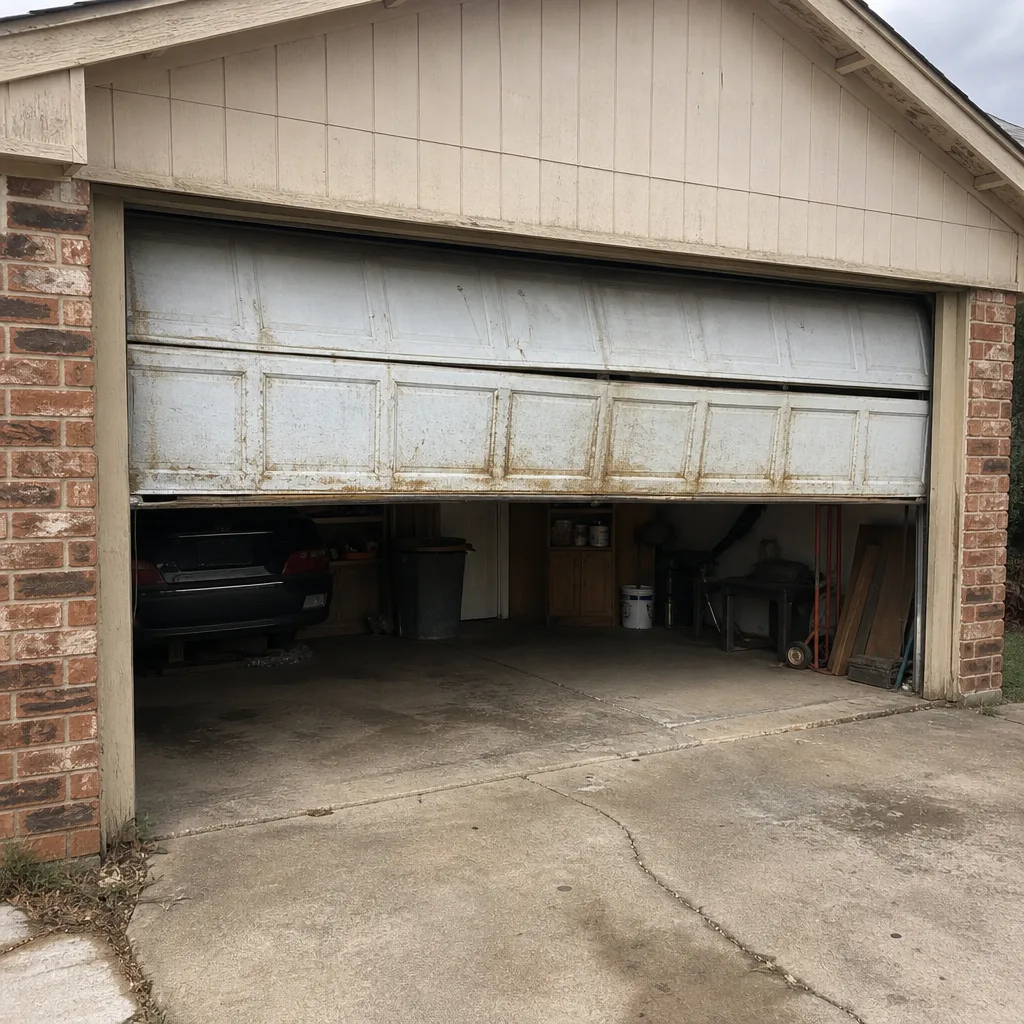 Before
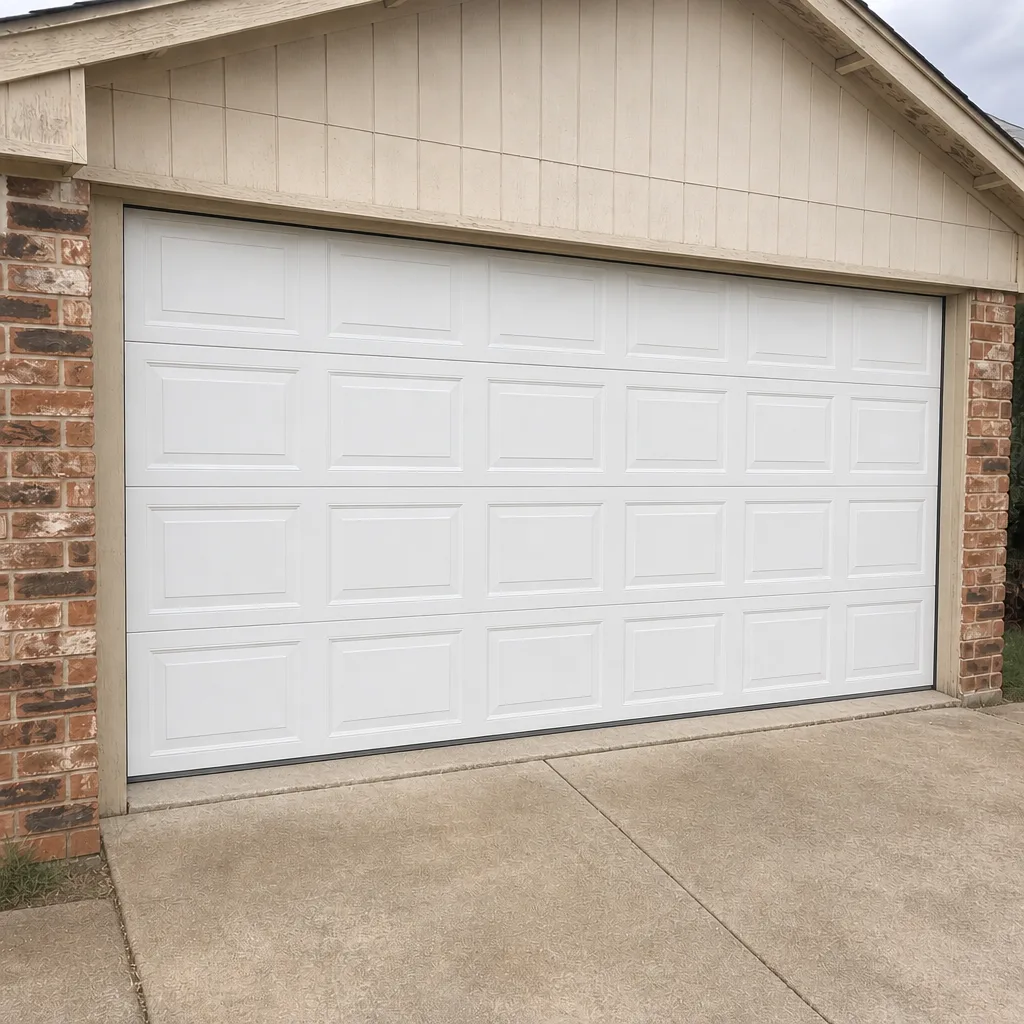 After
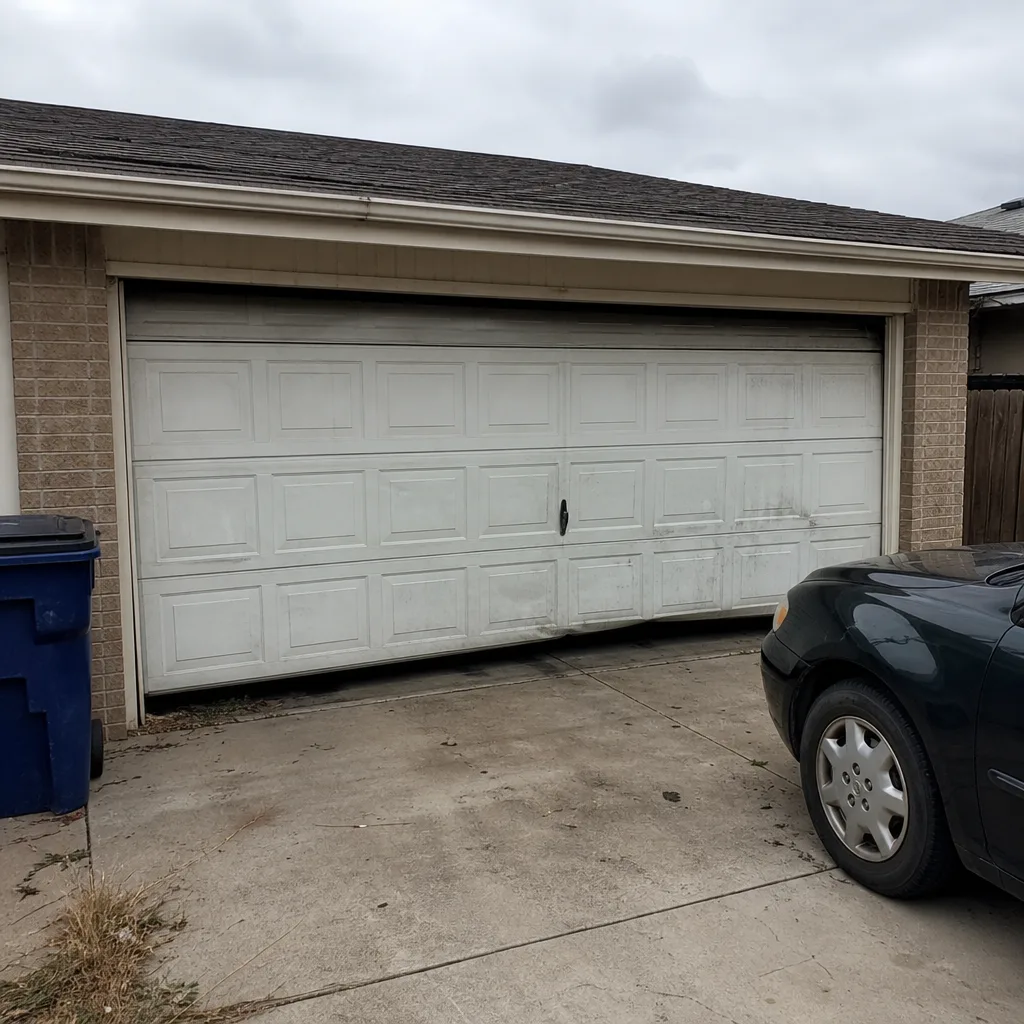 Before
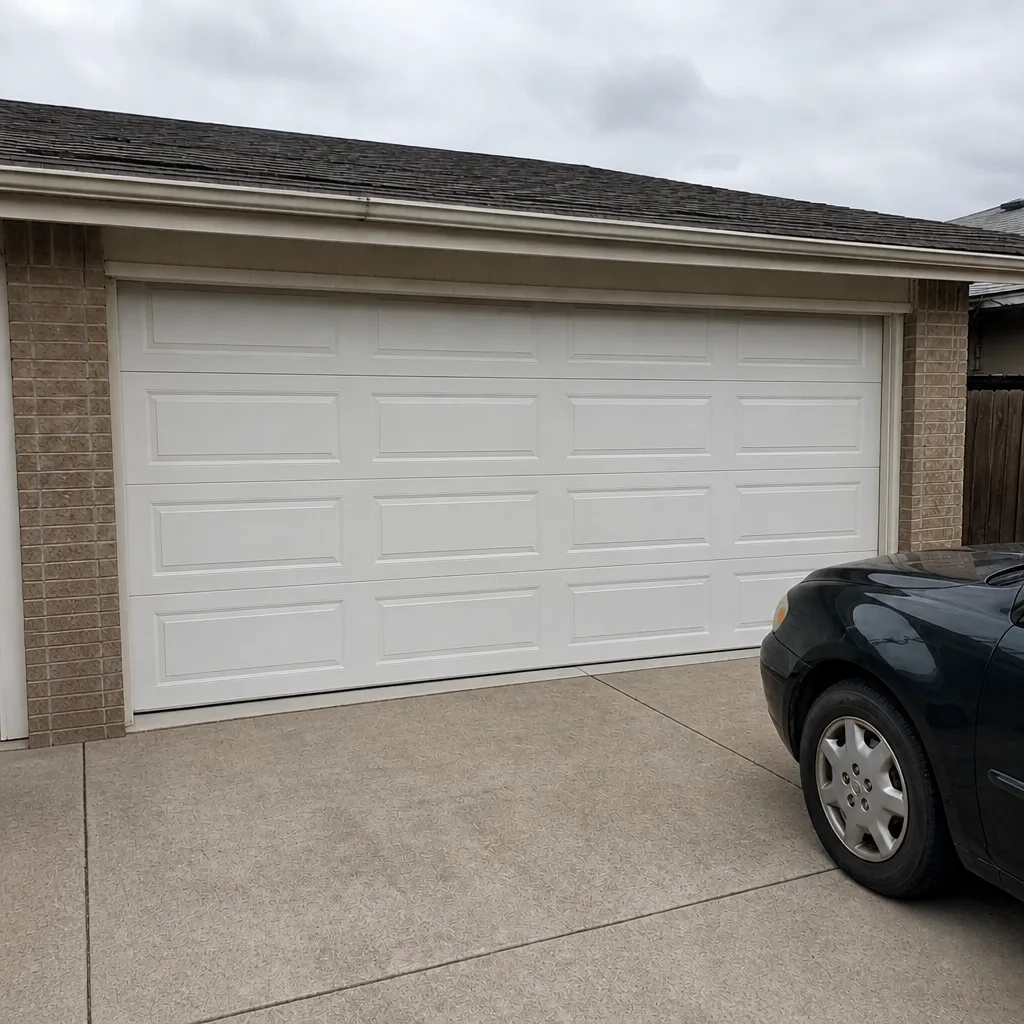 After
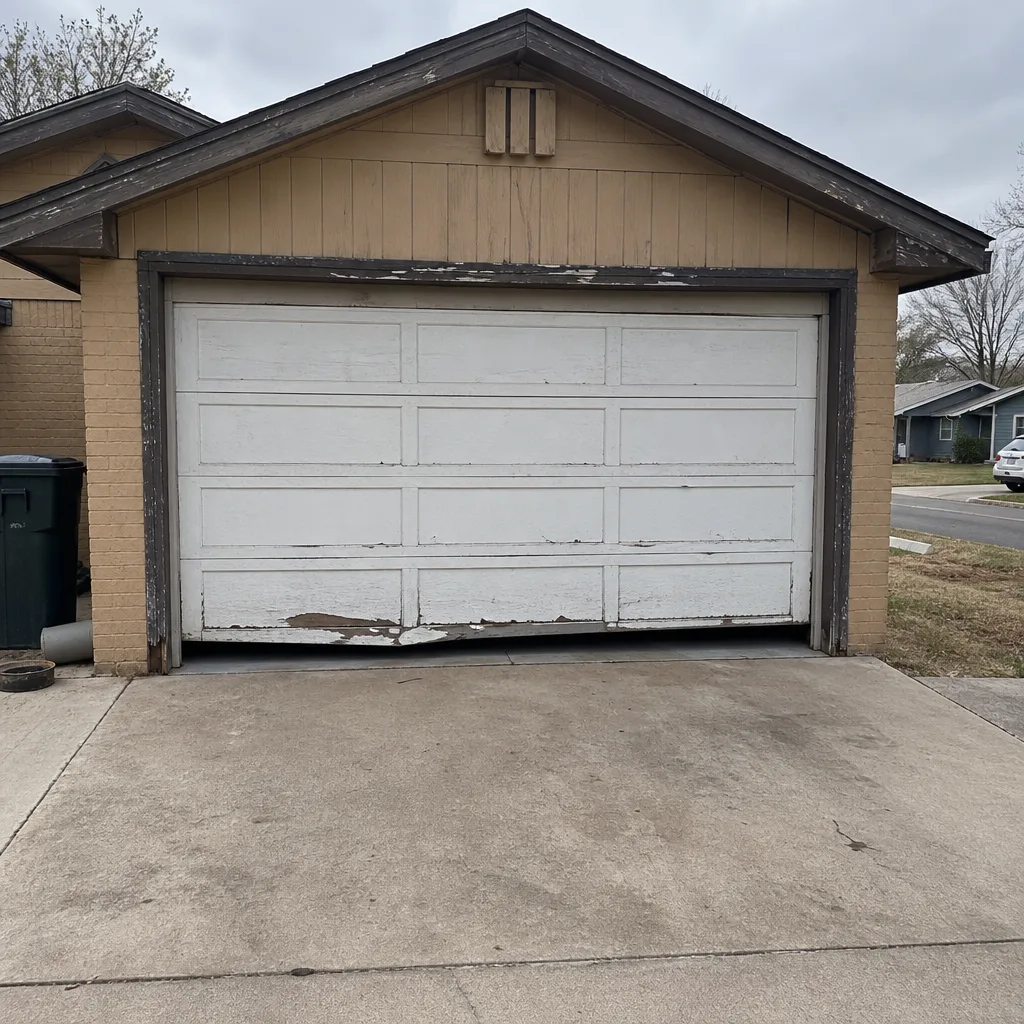 Before
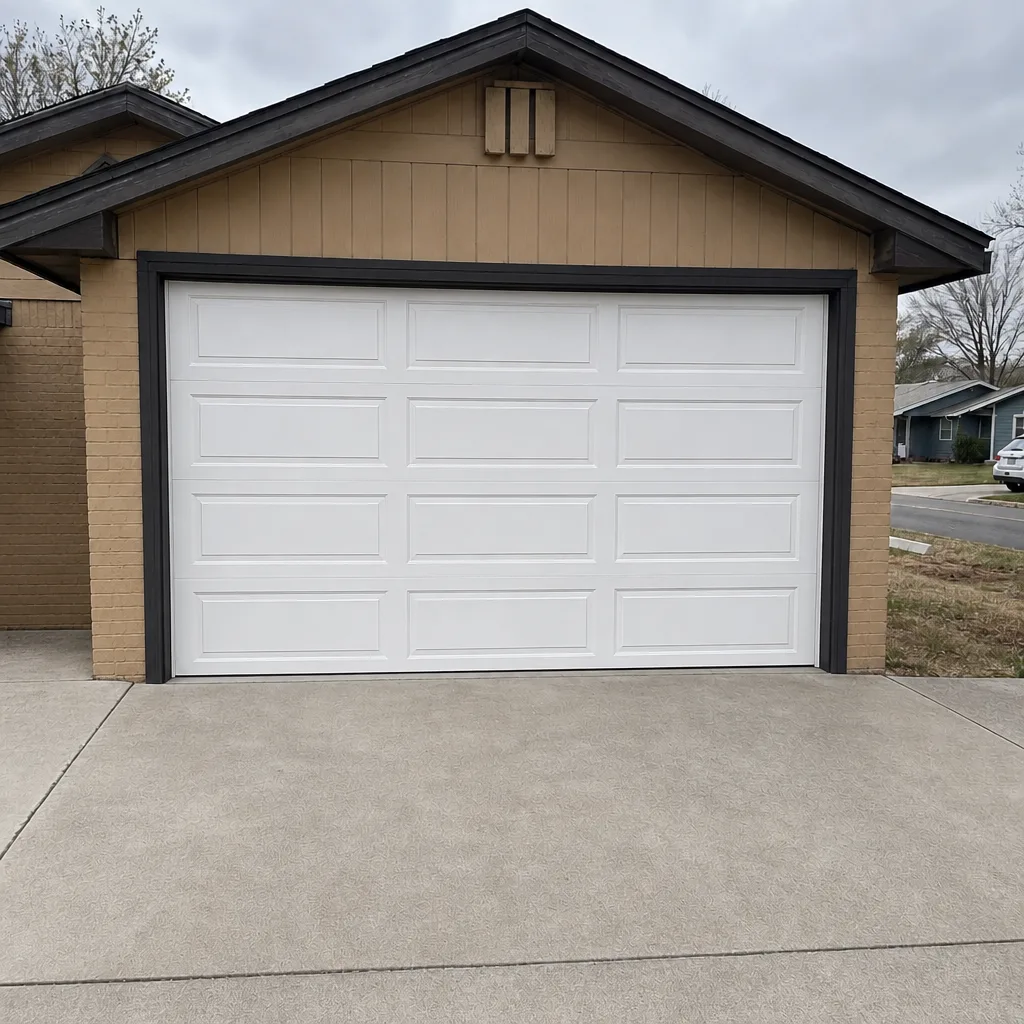 After
When to Call a Professional
Some maintenance you can handle. Post-dust cleaning, re-lubricating clean parts, and wiping the seal are all things you can do with a cloth and a can of spray lubricant. But certain problems need a trained technician: any sign of a weakening torsion spring, a door that’s out of balance or won’t stay up, a bent track or panel, a roller set that needs replacing, or an opener that shuts down even after the door has been cleaned and lubricated. Spring and cable work in particular is not a homeowner task. When in doubt, don’t force a door that resists. Nautilus Garage Door Repair offers free estimates in Midland and handles repair, opener repair, and full installation in one place. Our technicians have up to 9 years of experience and work with the eight major brands, from Amarr and Wayne Dalton to Craftsman and Raynor. Call (844) 904-1321 to schedule.
Frequently Asked Questions
Re-lubricate the rollers, hinges, springs, and opener rail roughly every six months in Midland, and sooner after a heavy dust event. The standard yearly recommendation is too long here because summer heat thins and migrates standard grease. Call (844) 904-1321 for an inspection if you want a technician’s opinion on your door’s condition.
It’s usually the motor’s thermal cutoff tripping because the opener is overheating, often from fighting a stiff, dry door in a hot garage. Clean and lubricate the door, check its balance by hand, and have a technician confirm the force settings. Call (844) 904-1321 for a free estimate if the opener keeps shutting down.
Yes. In Midland, blowing soil and caliche dust work into roller bearings and hinge pivots, where they act like an abrasive and wear the metal. Cleaning and re-lubricating after dust events is the single most effective maintenance task here. Call (844) 904-1321 if your door already sounds gritty.
No. Torsion springs hold the full weight of the door under stored tension and can release suddenly, causing serious injury. Have a trained technician check or replace them. We can book a call to examine your springs, and estimates are free at (844) 904-1321.
Replace it when it has cracks, splits, or a flattened edge that no longer seals against the floor, and clean out grit after dust events in the meantime. A worn seal lets more dust into the garage, which speeds up wear on the moving parts. Call (844) 904-1321 to have it replaced and matched to your door.
We service the eight major brands, including LiftMaster, Chamberlain, Genie, Clopay, Amarr, Wayne Dalton, Craftsman, and Raynor, across repair, opener repair, and installation. That means you don’t get a “we don’t service that brand” answer. Call (844) 904-1321 for a free estimate and we’ll work with the system you already have.
The Bottom Line
Keeping a garage door reliable in Midland comes down to adjusting a generic checklist to what the local climate actually throws at it. Clean and re-lubricate after dust events, shorten your lubrication interval because of the heat, time your spring tension checks to the seasonal temperature swings rather than the calendar, keep the bottom seal clean of grit, and read an opener shutdown as a signal to look at the whole door. None of it is difficult. What makes the difference is doing it on the right schedule for this market, catching wear while it’s a small repair. When you’d rather have a trained eye on it, call (844) 904-1321. We answer 24/7. Fast dispatch from 7am to 7pm, Sunday through Friday, and estimates are free.
Written by the team at Nautilus Garage Door Repair.